
Last updated November 21, 2026
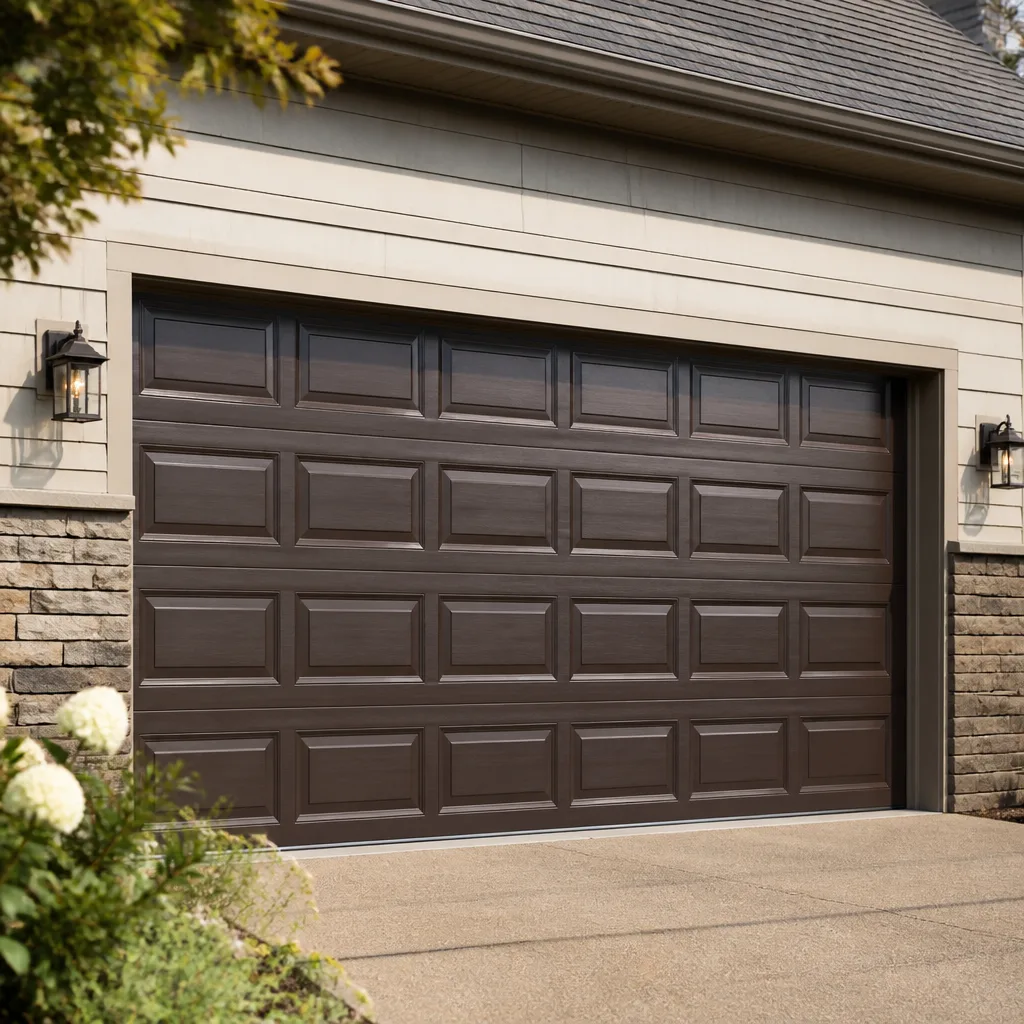 Raised-panel steel
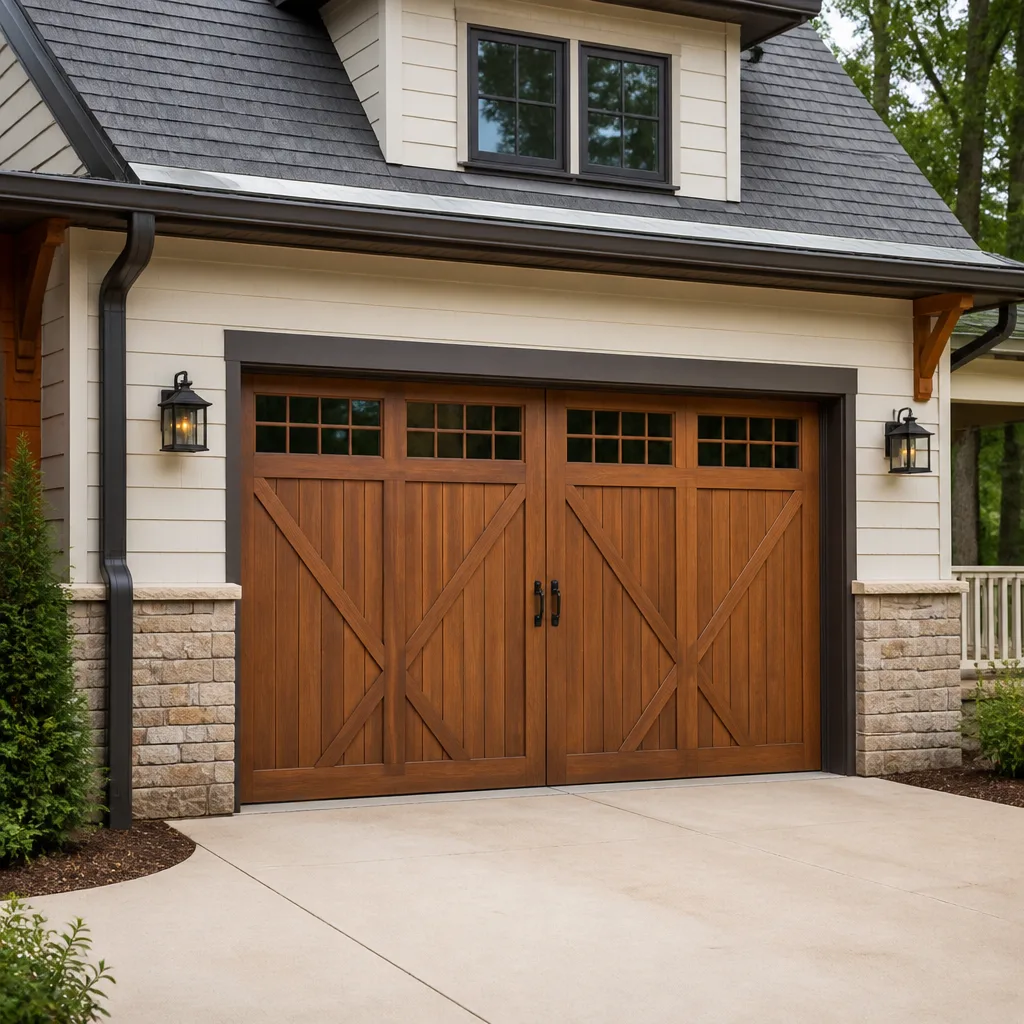 Carriage house
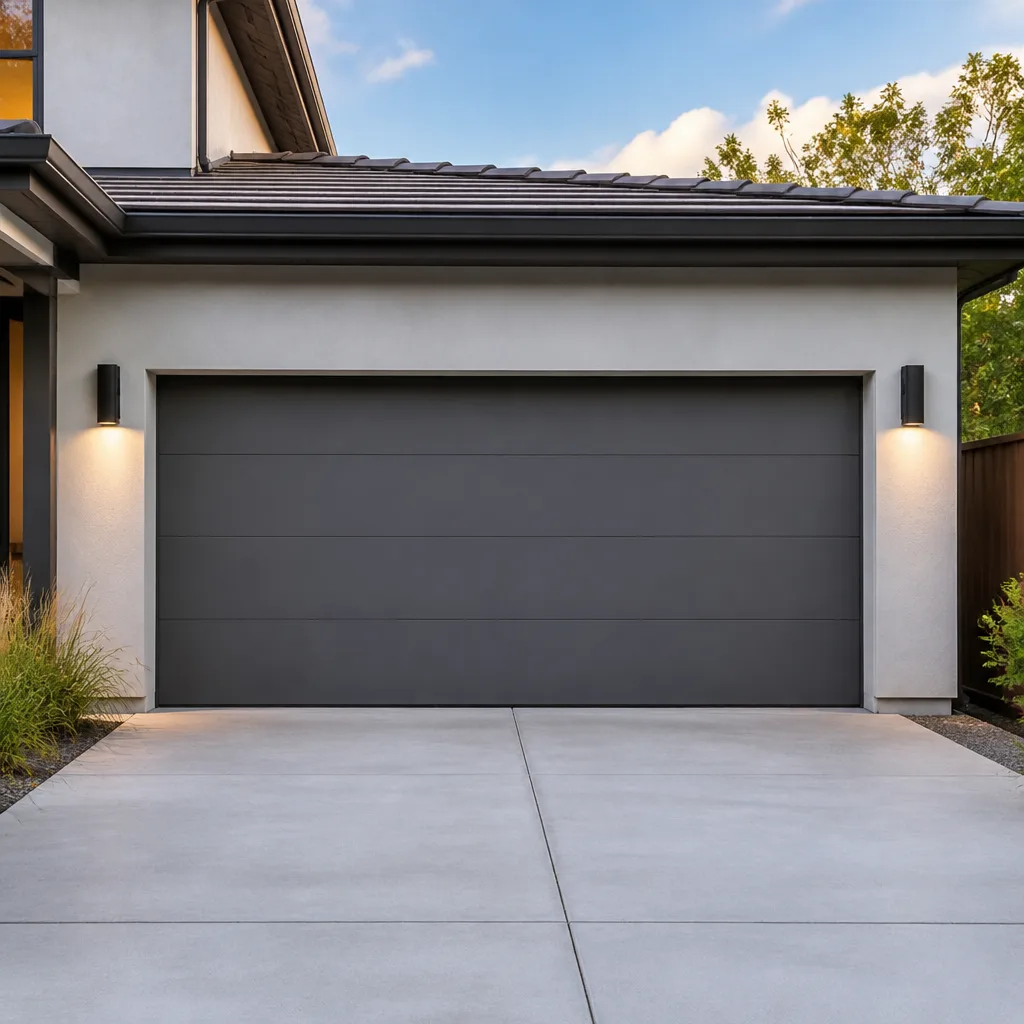 Modern flush
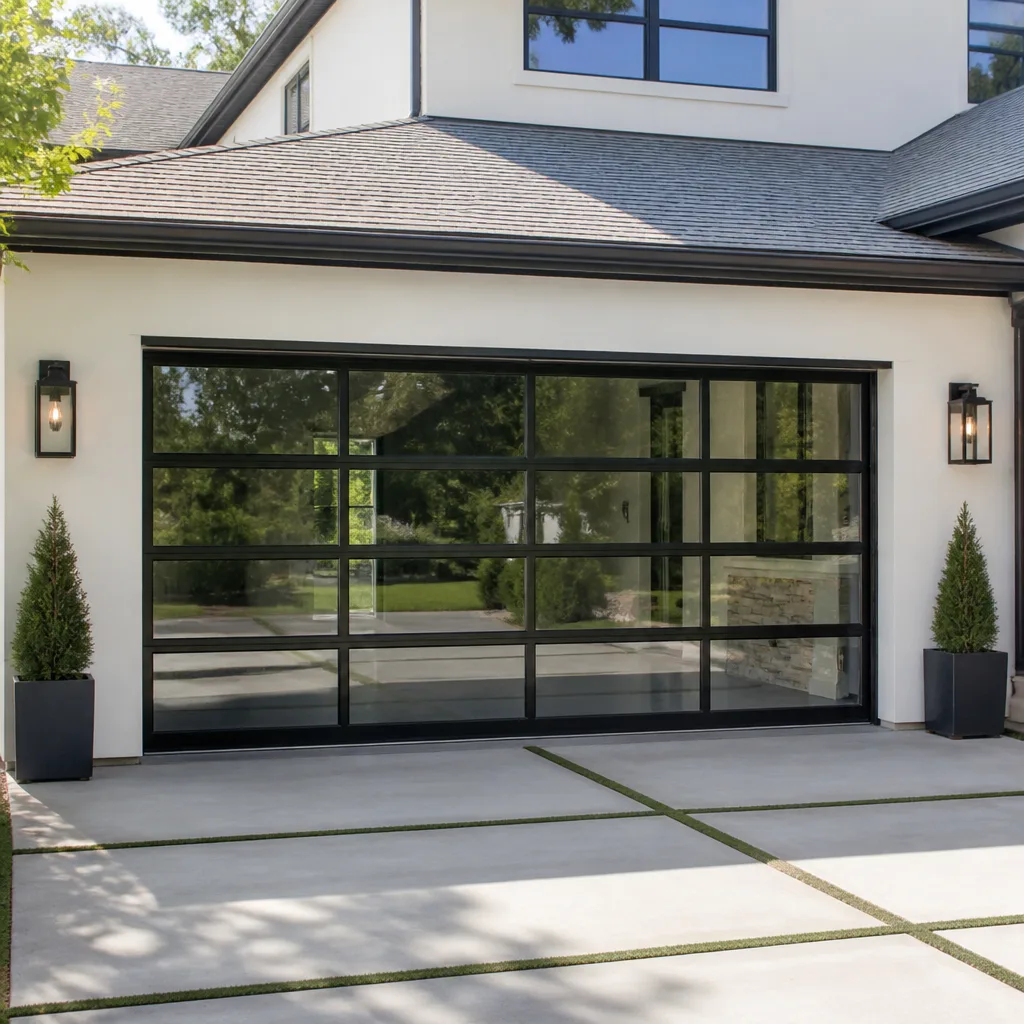 Full-view glass
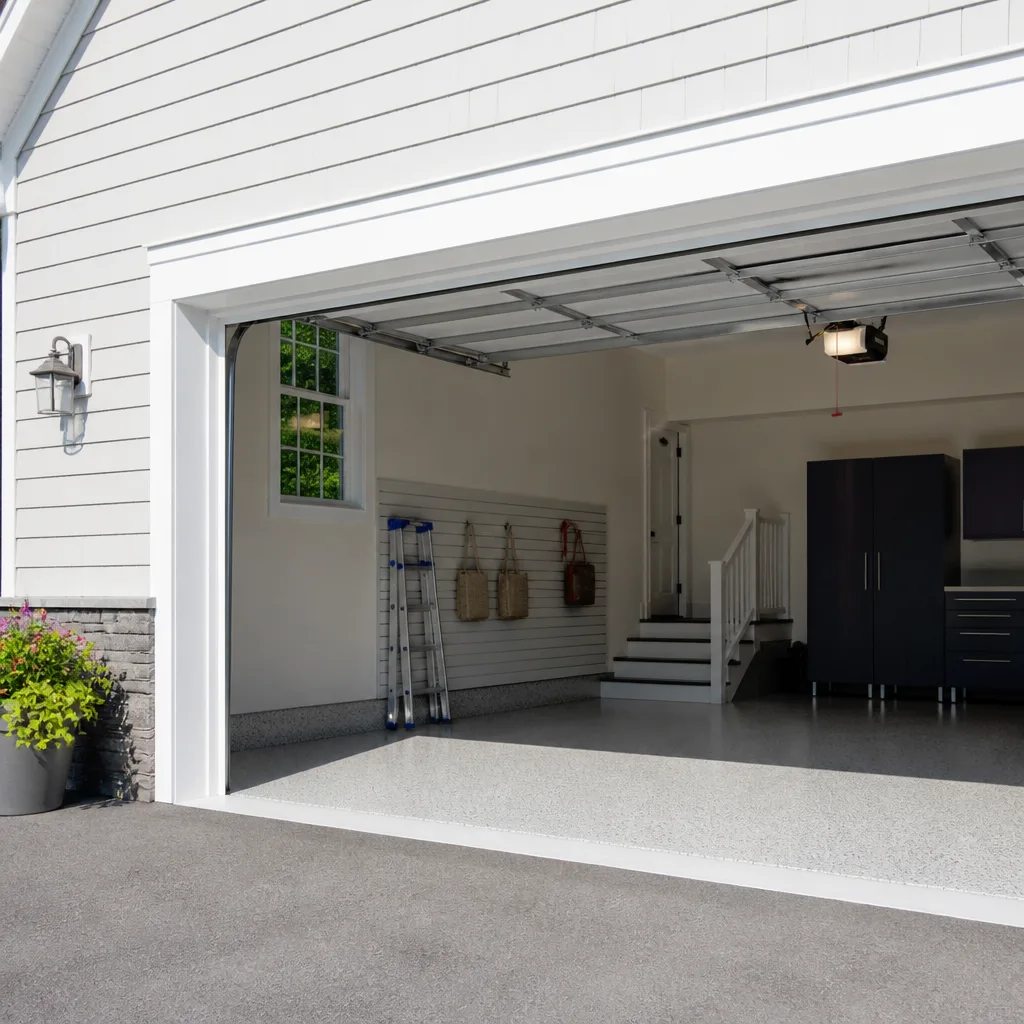 LiftMaster openers
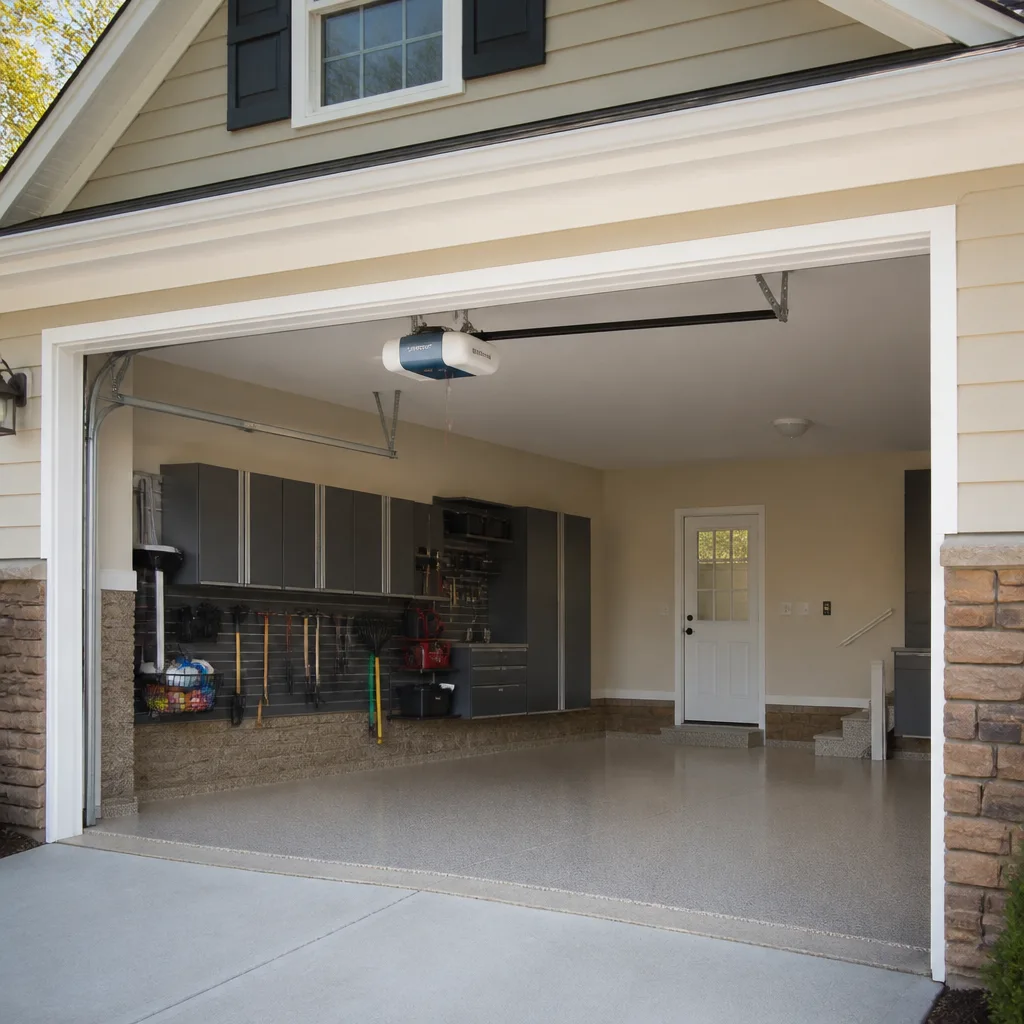 Chamberlain openers
Full 25-point door and opener safety check with every visit - springs, cables, rollers, tracks, and your LiftMaster or Chamberlain opener included
You get a price before we start. It does not change when the pro arrives.
Get your free estimateThe Complete Guide to Garage Doors in Long Island City
Most garage door guides assume you have a detached suburban garage with ten feet of headroom and a wide concrete apron in front of it. In Long Island City, that description fits maybe 30% of installations. The rest are attached row houses off Vernon Boulevard, converted warehouse bays near the waterfront, and new high-rise garages with low ceilings and tight turning space. Each of those building types asks something different from the door, the springs, and the opener. This guide maps those differences so you can make a decision that fits your building instead of buying hardware meant for a house in Nassau County.
Quick Answer
Garage doors in Long Island City are not selected by brand preference alone. They’re selected by matching door weight, spring type, headroom, and opener duty rating to the specific building – an attached row house, a converted industrial bay, or a high-rise parking level. Get that match right and the door lasts; get it wrong and springs fail early, openers strain, and repairs repeat.
Styles & brands we work with
- Raised-panel steel
- Carriage house
- Modern flush
- Full-view glass
- LiftMaster openers
- Chamberlain openers
Table of Contents
- How LIC’s Building Types Change Your Garage Door Options
- Low Headroom, High-Lift, and Clearance: What You Actually Have
- NYC DOB Permits: When You Need One and When You Don’t
- Why Springs and Cables Age Faster Block by Block
- Brand-by-Brand Panels: Retrofit Reality for Older Bays
- Residential vs Commercial-Duty Openers for Multi-Unit Garages
- Repair or Replace? A Decision Framework
- What Yearly Service Looks Like Here
How LIC’s Building Types Change Your Garage Door Options
Long Island City is not one market. It’s several stacked on top of each other, and the garage door you can put on one building may not physically fit in another three blocks away. We’ve seen this split play out through every brand we carry service knowledge for.
Attached row houses, common in Hunters Point and the older residential stretches of Dutch Kills, usually have a shallow garage bay tucked under the living space. The door opens under a low ceiling with a beam or duct running across the top. That means a torsion spring system with modified tracks, or in some cases a low-headroom setup that trades vertical clearance for horizontal travel.
Converted industrial bays, the kind that line the blocks between Court Square and the waterfront, tend to be wide and tall. They were built for truck access, so the door opening might be twelve to sixteen feet wide with full vertical clearance. The problem here isn’t space; it’s finding a residential-duty door that’s rated for that weight, and an opener or manual lift system that matches.
High-rise condo garages, especially the newer towers near Gantry Plaza State Park, often have standard 7-foot openings but very low ceiling height on the parking level. That limits the type of opener that fits, and it means the door has to be a sectional design that works within the track envelope the developer left.
- Attached row house: expect low headroom, torsion springs, tight track geometry
- Converted industrial bay: expect oversized openings, weight-rated components, manual or heavy-duty lift
- High-rise parking level: expect standard height, low ceiling, limited opener options
If you’re not sure which category your building falls into, that’s usually the first thing a technician confirms during garage door repair Long Island City diagnostics – the door can’t be sized or repaired correctly without knowing what it’s mounted to.
Low Headroom, High-Lift, and Clearance: What You Actually Have
Headroom is the amount of vertical space between the top of the door opening and the ceiling. It’s the single most common reason a door installation goes sideways in Long Island City, because so many garages here were built tight.
Here’s the number that matters: a standard torsion-spring sectional door wants about 12 inches of headroom behind the opening. Below that, you need a low-headroom track system. In LIC’s attached row houses, we regularly encounter garages with 8 to 10 inches, which means the spring assembly has to be mounted differently and the top panel needs a quick-turn radius to swing up and back.
High-lift is the opposite. If you’ve got a sixteen-foot ceiling in a converted warehouse bay, a standard track would put the door at eye level in the open position. High-lift configures the vertical tracks to raise the door higher before it turns, freeing up the bay underneath.
- Measure vertical clearance from the top of the door opening to the ceiling. Under 12 inches usually means low-headroom tracks.
- Measure backroom – the horizontal distance behind the door opening to any wall or obstruction. Sectional doors need this much space to slide back.
- Check side clearance on both sides of the opening. Torsion springs and opener rails eat into this.
- Look for obstructions – ducts, structural beams, water heaters, or the way the stair well bumps into the bay.
Getting these four numbers wrong is how a door installation ends up needing custom tracks or a second visit. Measure once, measure carefully, and if you’re uncertain, have someone confirm the measurement before ordering panels.
NYC DOB Permits: When You Need One and When You Don’t
A straight one-for-one door swap – same size opening, same type of door, same track configuration – typically does not require a new NYC Department of Buildings permit. Anything that changes the opening, the structural framing, the header, or the door’s classification as a fire-rated assembly does.
This distinction matters in Long Island City because so much of the housing stock sits under Queens Community Board 2 jurisdiction, and commercial-to-residential conversions are everywhere. When a former warehouse bay becomes a residential garage, the door isn’t just a door anymore. It may need to be rated for fire separation, and that rating is part of the building’s certificate of occupancy.
In general terms:
- Direct replacement of a door with identical dimensions and specification: usually no permit
- Changing the opening size (widening, raising the header): usually a permit
- New garage door on a new opening in a conversion: typically a permit and possibly fire-rating review
- Changing a door’s material or weight in a fire-separation wall: may require review
We don’t issue permits and we don’t tell you whether yours is needed. That call comes from the NYC Department of Buildings or a licensed expeditor. What we can tell you is whether the door you want is physically compatible with your building, which is usually the question that drives the permit conversation. Ask the building department in writing so you have a record if the question comes up later during a sale or refinance.
Why Springs and Cables Age Faster Block by Block
Temperature and humidity swing more across Long Island City than people expect. The neighborhood sits between the East River and the heavier industrial pockets around Sunnyside and Astoria, and the mix of paved surfaces, older masonry, and newer glass towers creates localized pockets of heat and moisture that change how fast metal components wear.
The practical consequence for garage doors is real. A torsion spring is under constant tension, and every expansion and contraction cycle from temperature swings adds a small amount of stress. In Long Island City, that means spring life can run shorter than the manufacturer’s rated cycles suggest, especially on doors that face full afternoon sun or sit in unheated bays that drop near freezing in winter.
Cables take the same beating. A stranded steel cable running over a drum wears from friction and stretches over time, and in the humidity that builds up in older converted buildings, rust accelerates the wear. Cables that should last a long time can fray noticeably sooner than expected.
What to watch for:
- Springs that sound louder than they did last year
- Doors that don’t hold position when you release them halfway up
- Visible fraying or rust on the cables running over the drums
- Doors that lift unevenly on one side
- A bang from the garage that nobody can explain
If you notice any of these, stop using the door and call for garage door opener repair if the opener is the suspect, or for spring and cable work if the door itself is the problem. Springs and cables are high-tension components. Don’t try to adjust or replace them yourself.
Brand-by-Brand Panels: Retrofit Reality for Older Bays
Not every door brand’s panels fit every structure. In a converted commercial bay with an oversize opening, the retrofit question isn’t “which brand is best” – it’s “which brand carries a panel that fits this size, thickness, and track spacing without requiring custom fabrication.”
We work on eight major brands – LiftMaster, Chamberlain, Genie, Clopay, Amarr, Wayne Dalton, Craftsman, and Raynor – and the differences between them matter at the panel level. Clopay and Amarr both offer residential panel profiles across a wide range of widths, which makes them useful for row houses and standard bays. Wayne Dalton’s panel designs are often a better match for the tighter dimensions of an older LIC row house. Craftsman doors, which many homeowners inherited with the house, may be discontinued in the exact profile they were sold in, which forces a decision about whether to match one panel or replace the front.
For converted industrial bays, the practical flowchart looks like this:
- Measure the opening precisely – height, width, and depth of the jambs.
- Identify the original panel profile if one exists, so you know whether a color and rib pattern match is possible.
- Check whether the manufacturer still carries that profile in the size you need.
- Decide between matching panels and replacing the full door, based on spring age, opener condition, and what the building actually needs.
Most mismatches come from ordering before measuring. If you call with the door’s brand and the opening dimensions, the conversation is faster – the technician knows exactly which panels are candidates before anyone commits to an order.
Residential vs Commercial-Duty Openers for Multi-Unit Garages
A residential opener is built for a single-family door cycling a few times a day. A commercial-duty opener is built for a door cycling dozens or hundreds of times per day. Using a residential opener in a multi-unit LIC condo garage is one of the most common reasons those garages end up needing repair work repeatedly.
The difference isn’t just the motor size. It’s the duty cycle – the ratio of run-time to cool-down time. Residential openers typically carry a lower duty rating, and when asked to run 40 or 50 times a day on a heavy door, they overheat and wear out ahead of schedule. Commercial-duty openers are rated for continuous or near-continuous operation, and their gearboxes, belts or chains, and control circuitry are matched to that load.
Here’s how we think about the split for Long Island City buildings:
- Single-family row house: standard LiftMaster or Chamberlain residential opener is right for the job
- Two- to three-unit row house with shared garage: residential bracket is usually fine, but confirm the cycle count before assuming
- Multi-unit condo garage with more than five or so daily cycles per vehicle: commercial-duty or heavy-duty residential spec
- High-rise parking levels: commercial-duty, usually with a Jackshaft or trolley design that fits the ceiling envelope
The smart-home features on LiftMaster and Chamberlain openers – Wi-Fi, app control, MyQ compatibility – are available in both residential and some commercial-duty lines, so you don’t lose automation by going heavier. What you lose is the price advantage of a $200 box store unit, which usually costs more in repairs over three or four years than the heavier unit would have cost up front.
If you already have a Genie, LiftMaster, or Chamberlain opener and you’re weighing replacement, note that a full garage door installation can include the opener and the door together, which is often cheaper than piecemeal upgrades – and avoids compatibility surprises between a new opener and an old door’s weight.
Repair or Replace? A Decision Framework
The right question isn’t “is the door old” – it’s “what else is about to fail.” A door that needs one spring may be worth repairing; a door with a bent track, two failing springs, a tired opener, and a rusted panel is usually ready for replacement.
We use four signals to decide, in order:
- Structural damage to the door panels or track. Bent tracks, cracked panels, or a door that sags in the middle generally can’t be repaired economically.
- Spring age and cycle count. If a torsion spring has already been replaced twice and the door isn’t otherwise in good shape, the next failure often tips the balance.
- Opener age and duty rating. An opener that’s failing on a door that’s otherwise fine may just need an opener replacement, which is cheaper than a full door install.
- Safety features. No photo-eye at the bottom of the door, or no auto-reverse on contact, is worth fixing regardless of the door’s age, because those are the systems that prevent injury to people and pets.
In Long Island City’s converted buildings, we often find mismatched components – a Clopay door running on a Wayne Dalton track, or an Amarr panel mounted on tracks rated for a lighter door. That kind of Frankenstein setup is often cheaper to correct with a full replacement than with a sequence of repairs that never quite address the mismatch.
What Yearly Service Looks Like Here
Yearly service doesn’t prevent every failure, but it catches the ones that would strand you. A garage door has dozens of moving parts, and the ones that fail suddenly – springs, cables, rollers – usually gave warning signs first.
A basic annual service typically includes:
- Visual inspection of springs, cables, and drums for wear
- Lubrication of hinges, rollers, and the torsion spring coils
- Balancing check with the opener disconnected
- Safety reverse test on the opener’s photo-eye
- Tightening of bolts and track alignment
- Inspection of the door bottom seal and weatherstripping
For Long Island City buildings near the water, or in bays that face full sun and run hot in summer, we often suggest a twice-yearly visual check – one in spring and one in fall. That’s not a hard rule, just a habit that catches early rust and frayed cables before they become emergency calls. If you hear a pop, see a sag, or the door shifts off its track, stop using the door and call for repair.
Common Mistakes to Avoid
- Buying a door without measuring headroom first. A standard sectional needs about 12 inches behind the opening. In LIC’s attached row houses, you may have 8 to 10, and that changes the door you can buy.
- Installing a residential opener in a multi-unit building. Duty-cycle limits in a shared condo garage wear out residential openers fast. Match the opener to the cycle count, not just the door size.
- Assuming a direct replacement needs a permit – or that it doesn’t. Ask the NYC Department of Buildings directly. In conversions, fire-rating questions can change the answer.
- Retrofitting one panel without checking brand compatibility. Panel profile, thickness, and seam pattern vary by brand. A Craftsman door’s original panel may be discontinued, forcing a decision before ordering.
- Trying to adjust a torsion spring yourself. Torsion springs are under hundreds of pounds of tension. Don’t touch them. Call for garage door repair.
- Ignoring a warning sound. A single loud pop followed by a door that won’t lift usually means a broken spring. Running the opener on a broken spring damages the opener too.
- Using a general handyman for the door system. Springs, openers, and panels each have specific failure modes. A dedicated specialist diagnoses all three in one visit instead of three separate ones.
See the difference
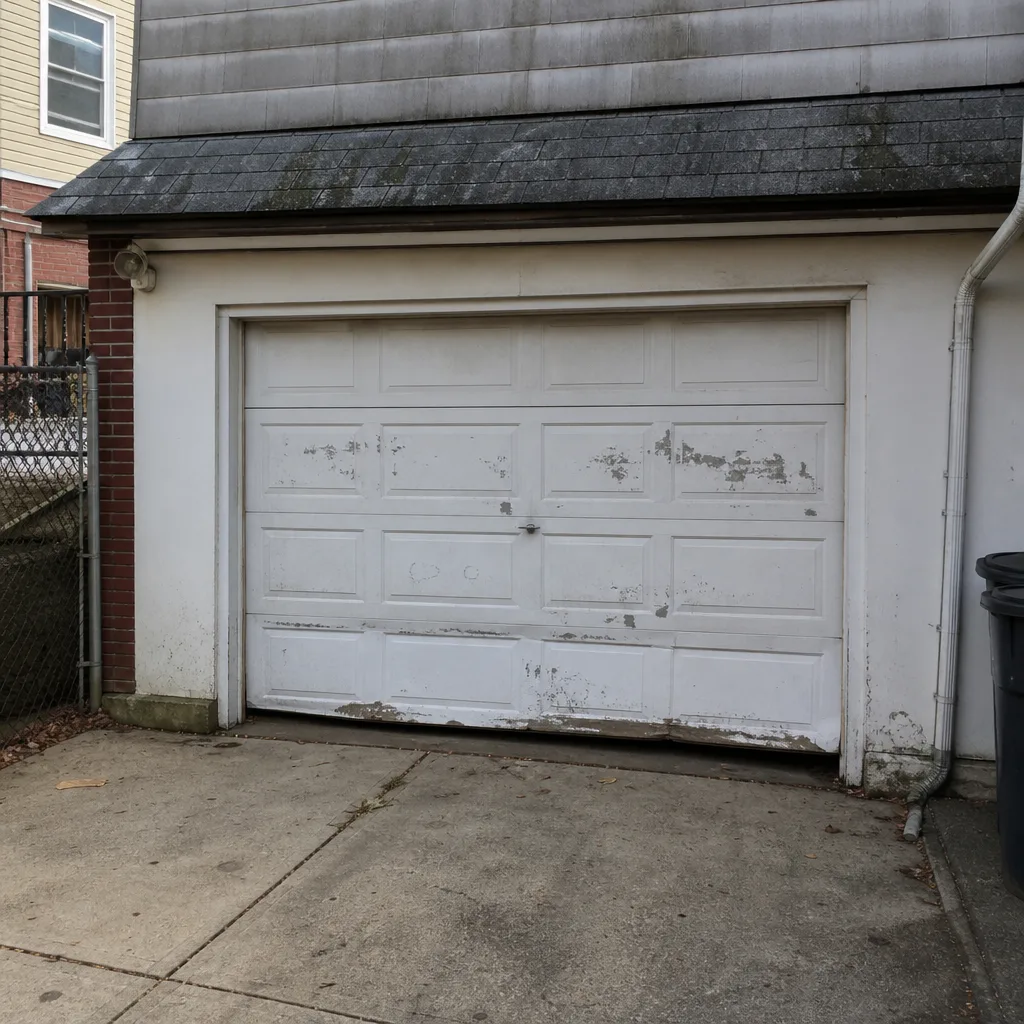 Before
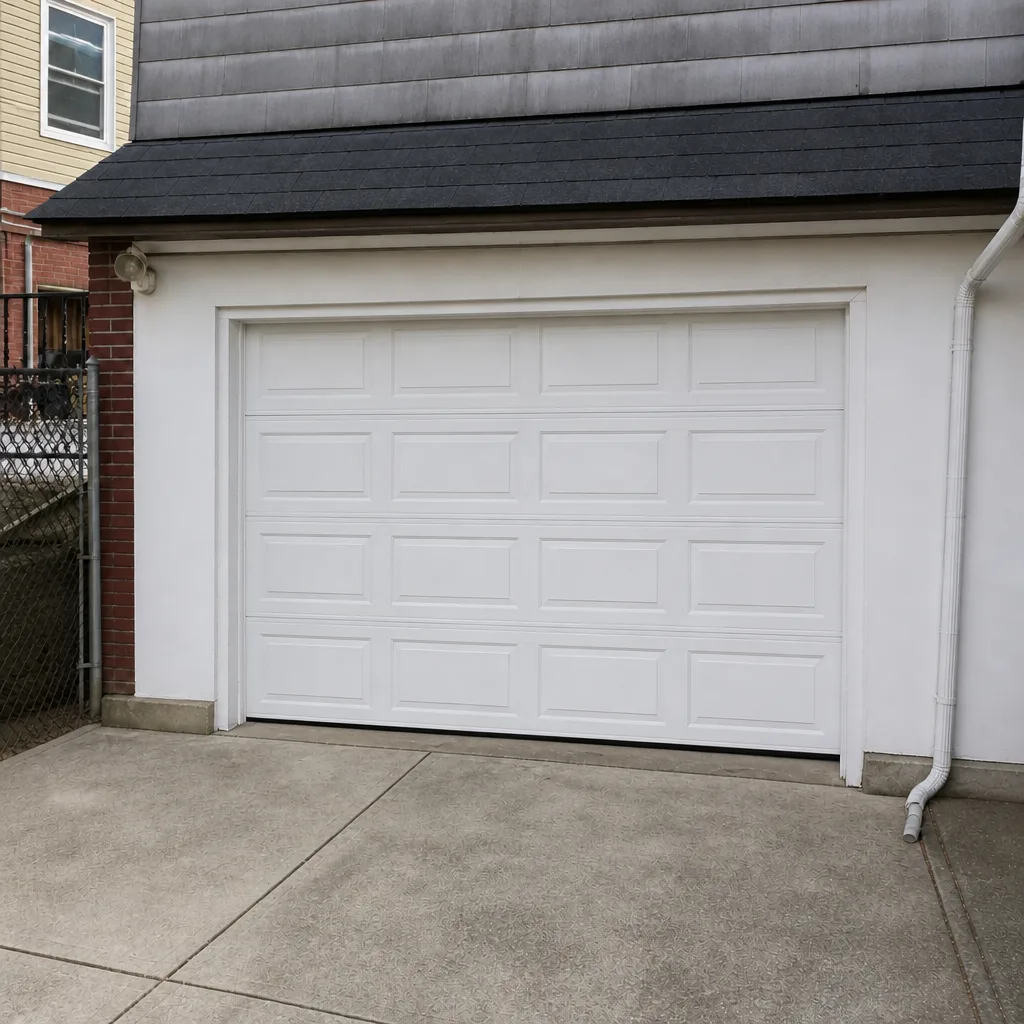 After
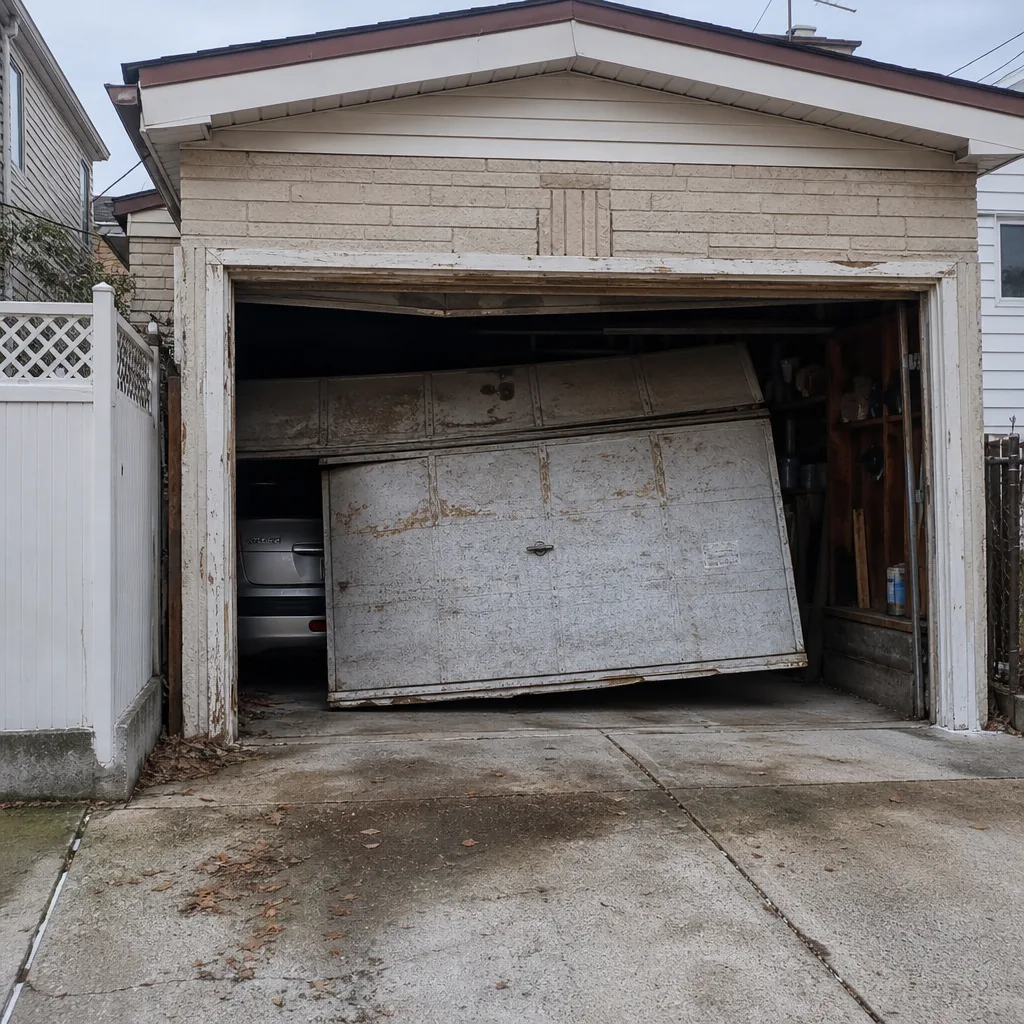 Before
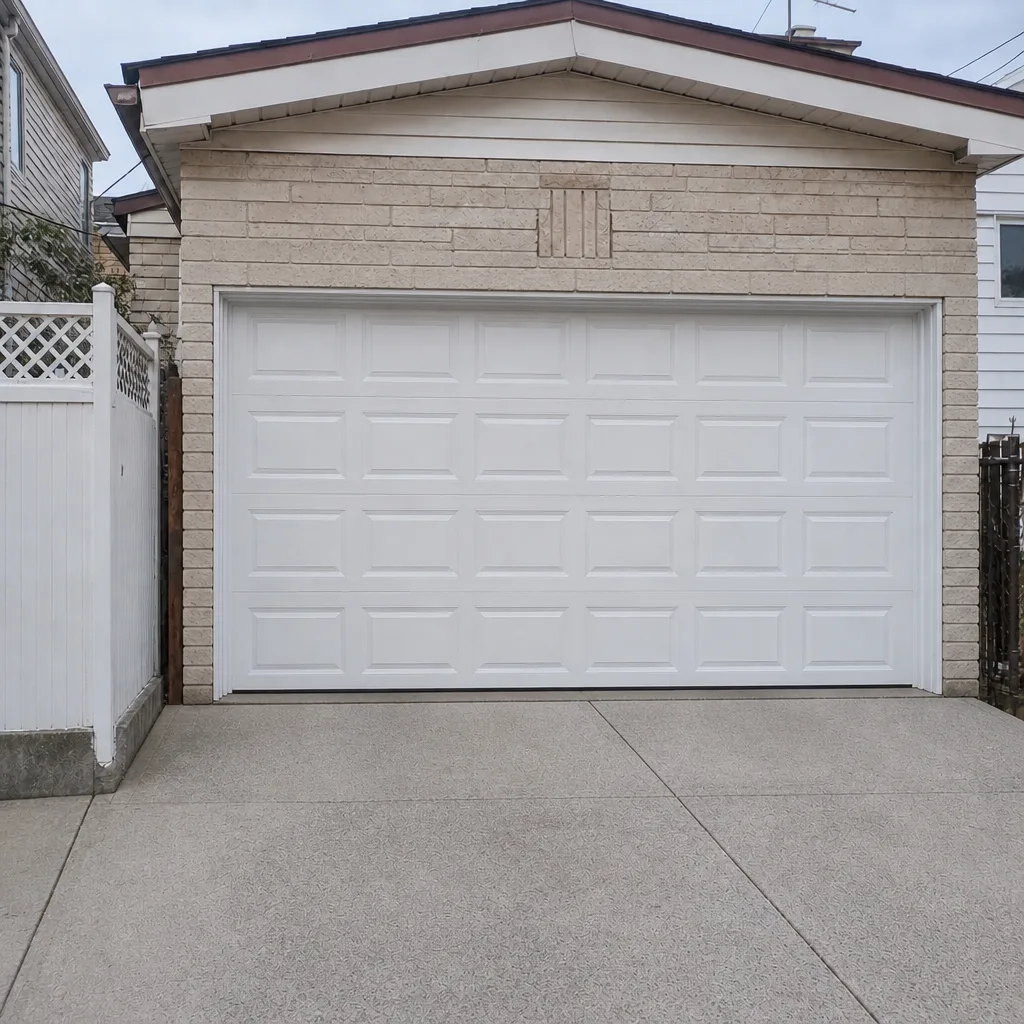 After
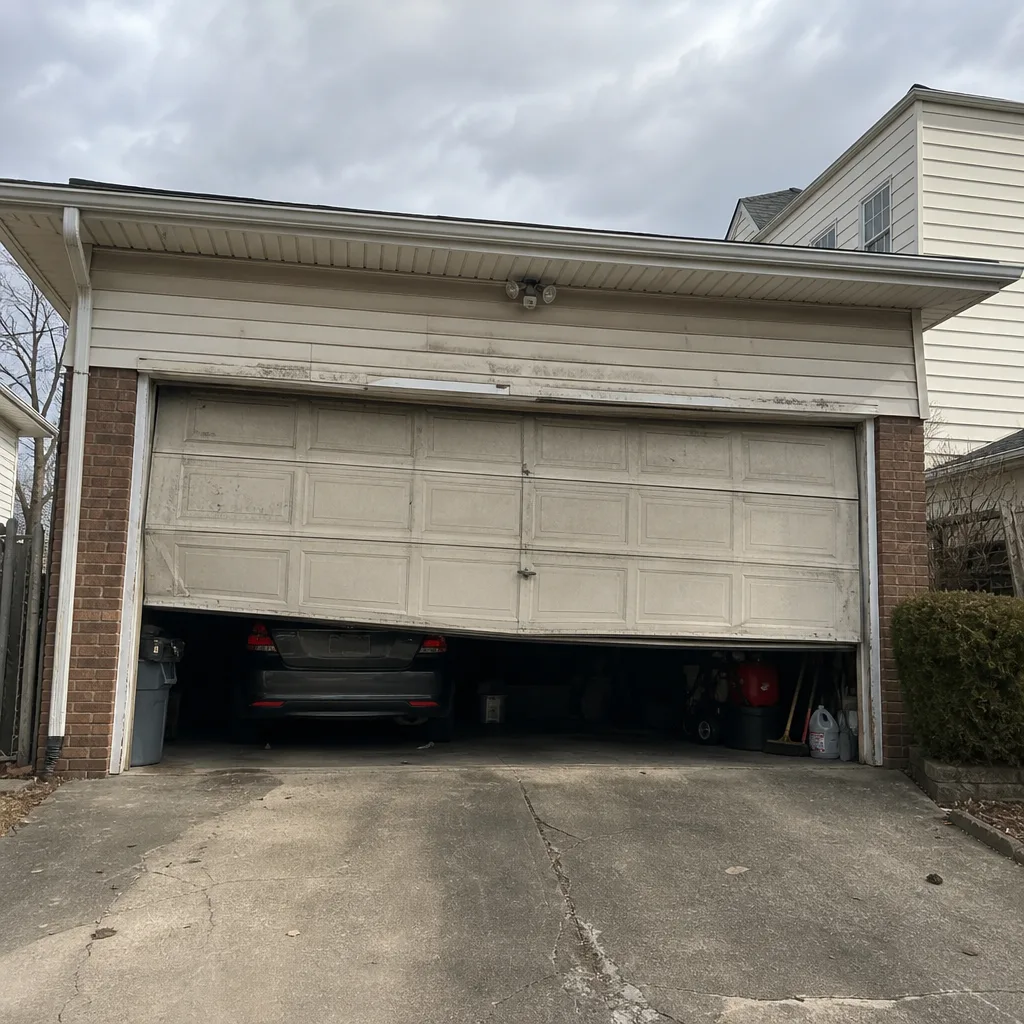 Before
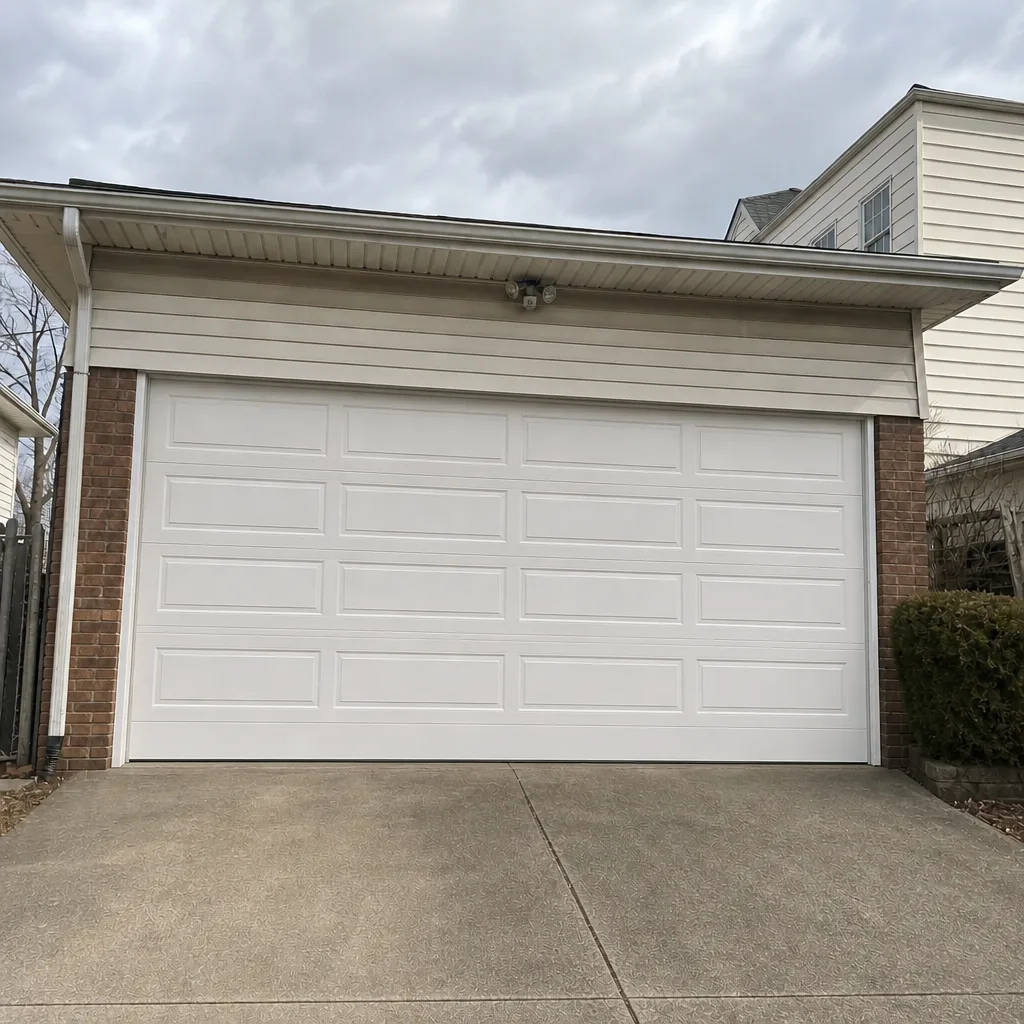 After
When to Call a Professional
Call a professional when the door won’t open or close fully, when you hear a loud pop followed by a loss of lift, when the door hangs crooked, when the opener runs but the door doesn’t move, or when the bottom safety sensor is missing or broken. Those are the situations where continuing to use the door risks damage to the opener or injury to someone underneath.
Springs and cables are dangerous. Torsion springs carry enough tension to break a wrist or worse, and cables store energy as they come off the drum. Don’t try to adjust or replace either one on your own.
Garage Door Repair Long Island City offers free estimates in Long Island City. Call (877) 549-7594. We work on all eight of the major brands, including LiftMaster, Chamberlain, Genie, Clopay, Amarr, Wayne Dalton, Craftsman, and Raynor.
Frequently Asked Questions
Spring replacement in Long Island City typically runs around $180 to $340 for a single torsion spring, and a matched pair is usually replaced together at about twice that. Cables and drums are often quoted separately if they’ve also worn. Prices vary with door weight, spring type, and access, and the written estimate you receive before any work starts sets the final number. Call (877) 549-7594 for an exact quote – estimates are free.
A direct one-for-one replacement of the same size and type of door typically does not require a new permit. Changing the opening size, adding a door to a new opening, or altering a fire-rated separation wall usually does. The NYC Department of Buildings makes that call, so check with them in writing. We can confirm what fits your building and order accordingly.
Same-day service is often available for emergency repairs. We answer 24/7. Fast dispatch from 7am to 7pm, Sunday through Friday. Call (877) 549-7594 with your door brand and a description of the problem, and we’ll confirm the fastest slot.
A residential opener is rated for a few cycles a day; a commercial-duty opener is rated for dozens or more. Multi-unit condo garages in Long Island City usually need the commercial-duty spec because residents cycle the door too often for a residential unit to hold up. We can look at your cycle count and recommend the right match.
Yes. The local professional dispatched to your job is licensed and insured as their state requires. Our technicians have up to 12 years of experience and work across the eight major brands. Call (877) 549-7594 with your questions.
The written estimate sets the price before any work starts. If we discover a second issue during the diagnosis – a cable that also needs replacing, for example – we quote that separately and you approve it before we do the work. You won’t get an invoice that’s higher than the estimate you agreed to. Call (877) 549-7594 for an estimate.
The Bottom Line
Garage doors in Long Island City aren’t a generic home-improvement purchase. The building type – attached row house, converted warehouse, or high-rise parking level – drives the door, the tracks, the springs, and the opener. Measure headroom before you shop, match the opener to the cycle count, check with the NYC Department of Buildings before changing anything structural, and watch springs and cables for early wear because the local humidity and temperature swings accelerate both. When something fails, call a specialist who handles the whole system: door, springs, opener, and installation. Garage Door Repair Long Island City offers free estimates – call (877) 549-7594. We answer 24/7. Fast dispatch from 7am to 7pm, Sunday through Friday.
Written by the team at Garage Door Repair Long Island City.