
Last updated November 21, 2026
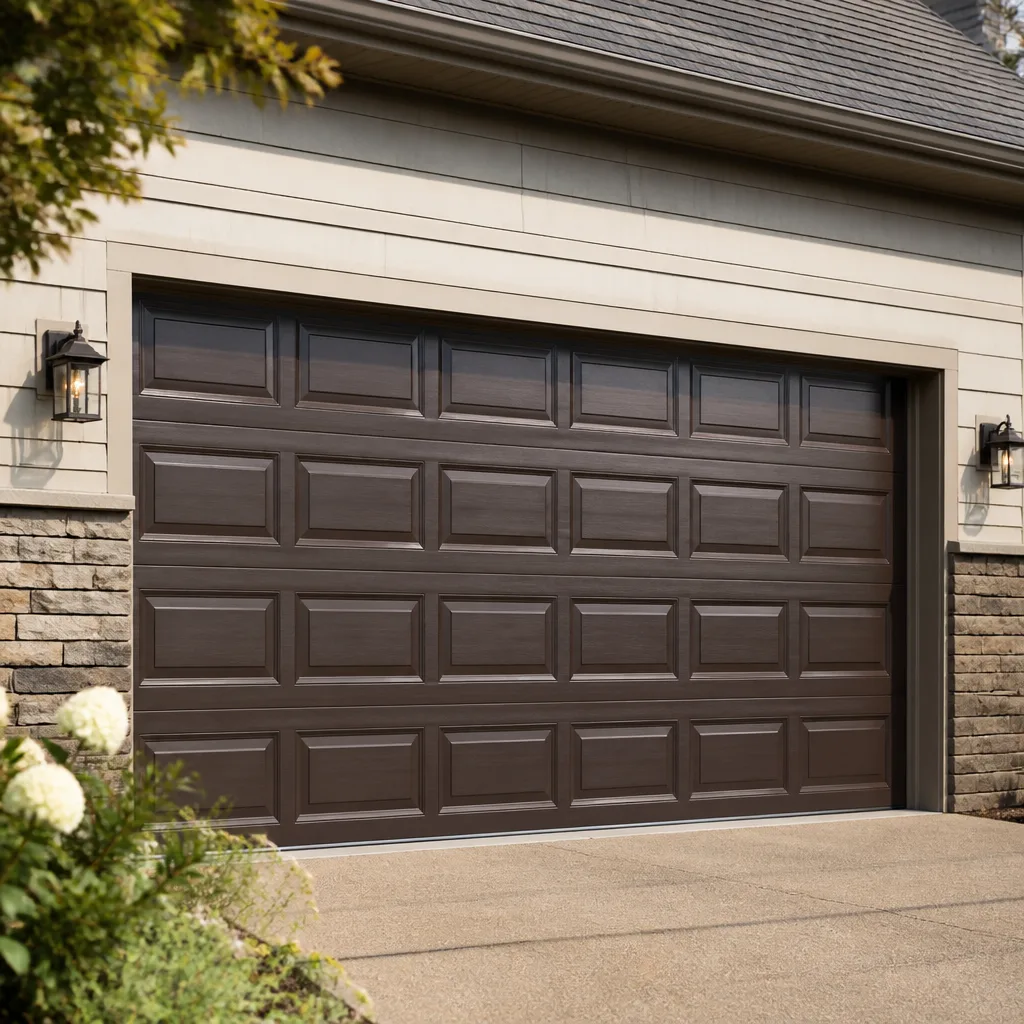 Raised-panel steel
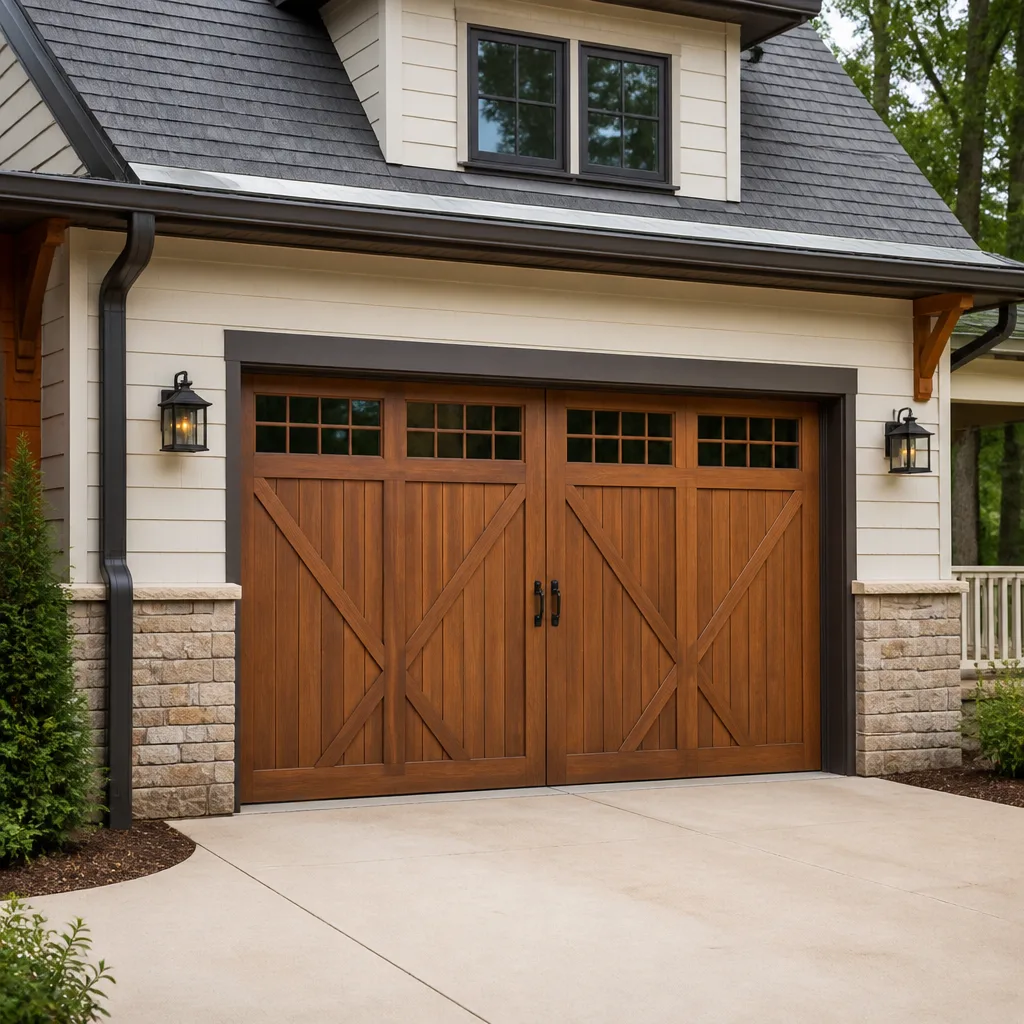 Carriage house
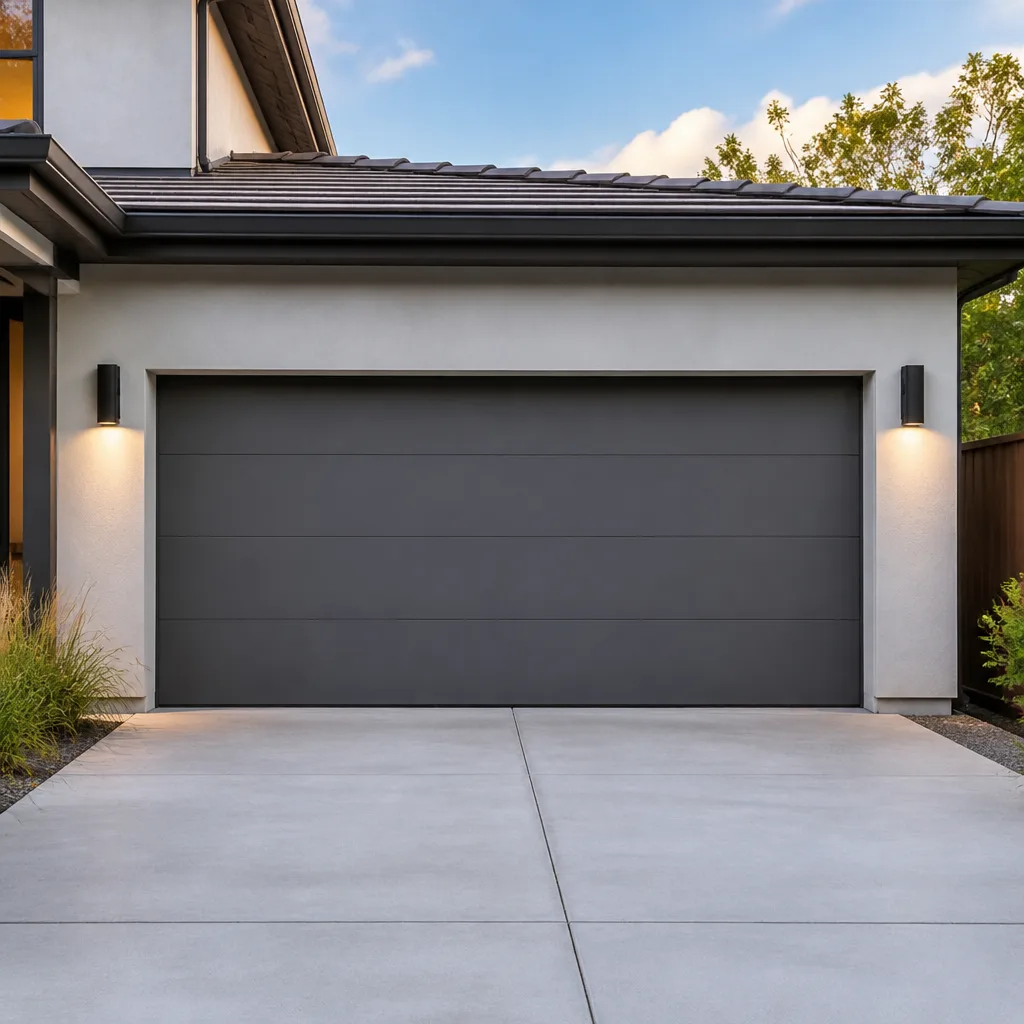 Modern flush
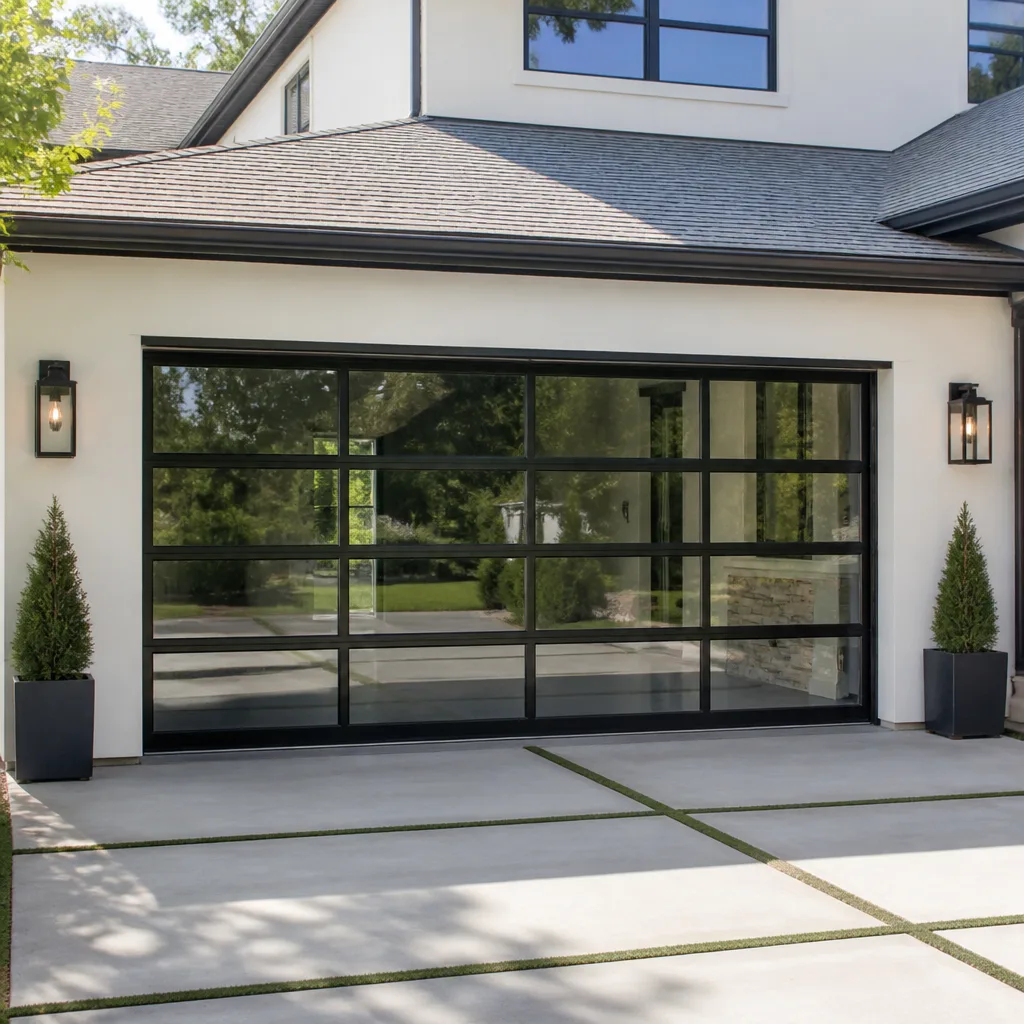 Full-view glass
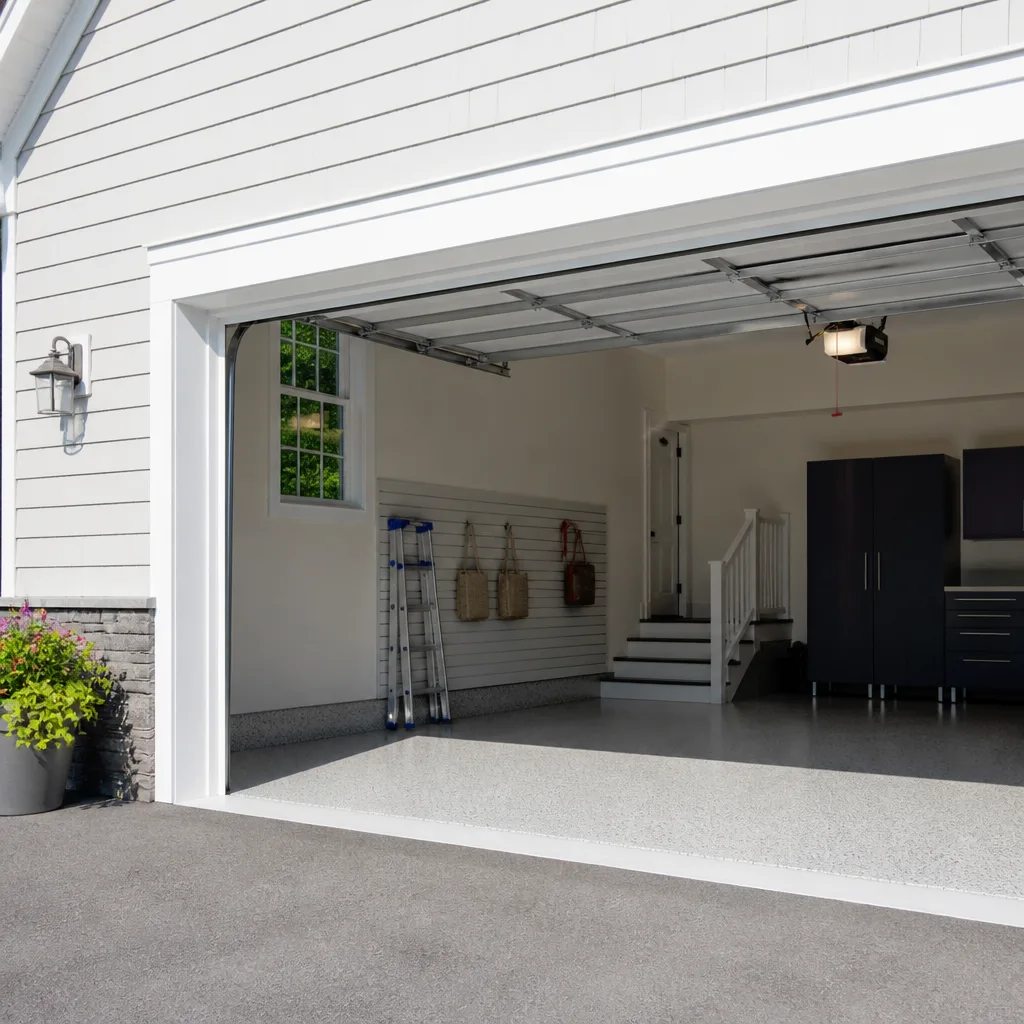 LiftMaster openers
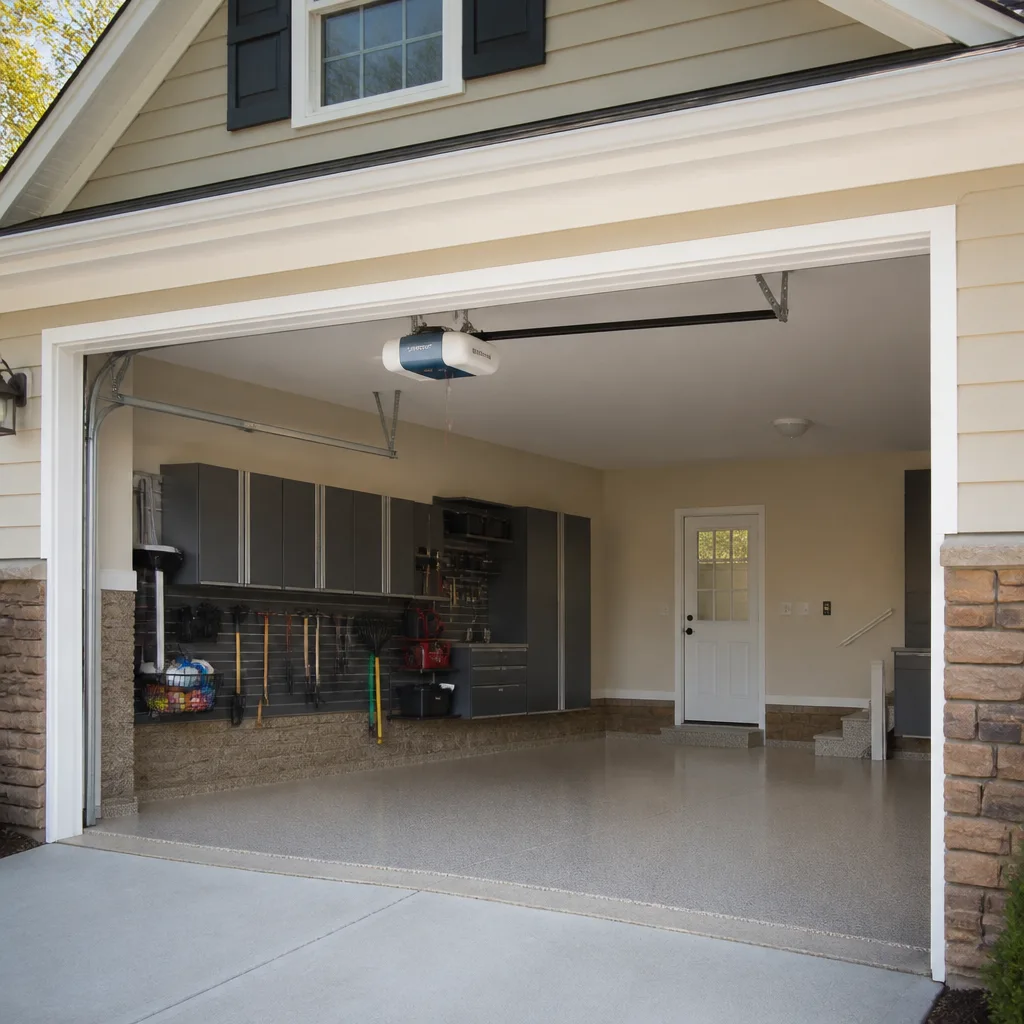 Chamberlain openers
Full 25-point door and opener safety check with every visit - springs, cables, rollers, tracks, and your LiftMaster or Chamberlain opener included
You get a price before we start. It does not change when the pro arrives.
Get your free estimateGarage Door Warning Signs: A Long Island City Homeowner’s Reference Guide
A garage door that hesitates for half a second before it moves isn’t “getting old.” It’s telling you the spring tension is off-balance, and in our experience that half-second turns into a full stop within 30 to 90 days. The signs that matter most are the ones you’d never put on a symptom list: a door that lands unevenly, an opener that clicks before it lifts, a spring that rusts in patches instead of all over. This guide is built to help Long Island City homeowners read those early signals while there’s still a repair window, before a door becomes a safety hazard or traps a car inside.
Quick Answer
The most reliable early warning signs of garage door failure are a door that hesitates before moving, descends unevenly by an inch or more, bounces at the floor on close, or makes a new grinding, squealing, or clicking noise from the opener. Rust on torsion springs, and LED codes on LiftMaster, Chamberlain, or Genie openers, are two of the earliest signals you’ll ever get. Any one of these means the door should be inspected by a technician before you keep running it.
Styles & brands we work with
- Raised-panel steel
- Carriage house
- Modern flush
- Full-view glass
- LiftMaster openers
- Chamberlain openers
Table of Contents
- The Hesitation Signal: What Half a Second Tells You
- The Asymmetry Test: Why One Inch Matters
- Opener Noise Taxonomy: Grinding, Squealing, and Clicking
- Reading Rust on Torsion Springs
- Why Your Door Bounces at the Floor
- LED Indicator Codes Most Homeowners Never Read
- Long Island City Conditions That Accelerate Wear
- A Monthly Two-Minute Walkaround
The Hesitation Signal: What Half a Second Tells You
A door that pauses before it starts moving up is the single most overlooked warning sign in a residential garage. Most homeowners write it off as the opener “warming up” or a cold morning quirk. What’s actually happening is that the torsion spring has lost some of its lift, and the opener is now doing work the spring used to share. The motor strains, the door lags, and the delay grows. A half-second on Monday is a full second by the middle of the season.
Springs on a torsion system are balanced against the weight of the door. When that balance drifts, three things follow in order. The opener pulls harder than it was designed to. The door tracks wear faster because the panels ride at a slight angle. And eventually the motor’s travel limits get confused by the extra effort, which is when the door starts reversing for no obvious reason.
Here’s the pattern to watch for:
- Delay appears. The door waits a beat after the opener engages before the panels lift.
- Delay becomes a stutter. The door starts, stops, then starts again.
- The door reverses on its own. The opener’s safety system reads the strain as an obstruction.
- The door stops halfway. Now you’re calling for repair, not inspection.
If you’re already at step three or four, that’s the moment to call for garage door repair rather than wait it out. Our technicians have up to 12 years of experience across LiftMaster, Chamberlain, Genie, Clopay, Amarr, Wayne Dalton, Craftsman, and Raynor systems, so we can usually name what’s failing by the sound the opener makes on the first cycle.
One thing we don’t want you to do: don’t try to “help” a hesitating door by lifting it while the opener runs. That’s how people get hurt, and it teaches you nothing about the spring. Let a technician read the balance with the door disconnected from the motor.
The Asymmetry Test: Why One Inch Matters
Stand back about ten feet from your closed door and watch it travel up and down. If one side reaches the floor before the other, even by an inch, you have a cable or spring imbalance, and the door is telling you about it long before anything breaks visibly. This is the test we recommend most often, because it costs nothing and catches the two most dangerous failures in the system before they become emergencies.
An uneven door almost always traces back to one of three things:
- Cable stretch or fraying on one side. Cables lift the door evenly. When one stretches, that side lags and the door rides crooked.
- Uneven spring tension between a matched pair. Torsion springs are installed as a pair and often replaced as a pair for exactly this reason. If a prior repair replaced only one spring, the older spring carries less lift and the door tilts.
- Track misalignment. If a track has been bumped (a car backing in too close, a bicycle leaning against the door), the rollers bind on one side and the door travels unevenly.
What makes the asymmetry test so valuable is the timeline. A door that lands crooked by an inch today usually develops a visible cable problem, a broken spring, or a jammed door within a few months. If one side is off by more than an inch, stop running the door. A cable that snaps under tension can whip with real force, and a door hanging off one spring can drop.
This is where Long Island City’s housing stock matters. Many of the townhouses, walk-ups, and converted industrial buildings in neighborhoods like Hunters Point, Dutch Kills, and the Court Square area have garages that were retrofitted into older structures. Track alignment in those spaces is often tighter than in a purpose-built suburban garage, and small misalignments show up faster. If the door is running down a track that’s within an inch of a wall or a beam, check the asymmetry test monthly rather than yearly.
If you find an imbalance, the next step is an inspection by a technician. Our team handles both torsion and extension spring repair, and we treat a crooked door as a safety issue until we’ve confirmed the springs and cables are sound.
Opener Noise Taxonomy: Grinding, Squealing, and Clicking
Most people lump every strange garage door noise into “it’s broken.” The specific sound tells a technician what’s actually failing, and each one predicts a different repair. Learning to name the noise helps you describe it when you call, and it helps you decide how urgently to act.
Grinding
A grinding noise almost always comes from the opener’s gear assembly or the drive. On a chain-drive unit, grinding usually points to a worn gear or a stretched chain slapping the rail. On a belt-drive, the same sound often means the belt has jumped its track or the sprocket has worn. Grinding gets worse with every cycle, and if you ignore it long enough, the opener runs but the door doesn’t move at all. That’s a gear failure, not an opener-you-can-live-with.
Squealing
Squealing traces back to rollers, hinges, and the torsion bar itself. Dry rollers squeal as they travel the track. Hinges squeal when their pins lose lubrication. The torsion bar can squeal against its center bearing when the door is out of balance. Squealing is usually the least urgent of the three, but it’s also the easiest to fix, and stopping the noise early prevents the friction damage that causes bigger problems later.
Clicking
Clicking has a few sources, and the opener’s limit switch is the one people miss. When the travel limit switch is going bad, the opener clicks each time it thinks it has reached the top or bottom, even when it hasn’t. Clicking can also come from a worn safety sensor or a loose trolley. A door that clicks repeatedly at the top of its travel without fully stopping needs a limit switch check before the motor burns itself out trying to drive past its own end-of-travel.
Here’s how we’d sum the pattern: grinding is the most urgent, clicking is the most diagnostic, and squealing is the most forgiving. All three are reasons to schedule garage door opener repair rather than wait for the door to stop moving entirely. We can usually name the brand and the failing part in one visit for LiftMaster, Chamberlain, Genie, Clopay, Amarr, Wayne Dalton, Craftsman, and Raynor systems.
Reading Rust on Torsion Springs
Rust on a torsion spring is not one condition, it’s three, and each stage tells you something different about how much life the spring has left. Knowing which stage you’re looking at is the difference between scheduling a replacement and having a spring snap on a Sunday morning with the car trapped inside.
Stage 1: Surface Rust
A light orange bloom on the coils, no flaking, no pitting. This is cosmetic and manageable. It tells you the spring is past its first decade of exposure to ambient humidity, but the metal beneath is still sound. If your door is otherwise balanced, surface rust is a signal to watch, not a reason to replace.
Stage 2: Pitting
Look closely at the surface of the coil. Pitting looks like small dark craters or a rough texture, almost like the metal has been scraped by gravel. Pitting means moisture has gotten past the surface and started eating into the steel. Every cycle now runs the risk of the coil weakening at that pit. A pitted spring should be replaced before it fails, not after.
Stage 3: Coil Separation
This is the final stage. The coils have visibly spread apart at one or more points along the spring’s length. You may see daylight between loops. Coil separation means the spring has lost structural integrity and can snap without warning. If you see it, stop using the door and call for service. Do not try to remove or replace a torsion spring yourself. The spring is wound under heavy tension, and this is one of the most dangerous jobs in residential home repair.
Springs are the part of the door system most tied to our work here in Long Island City. Conditions in the neighborhood, from the humidity of the East River waterfront to the dust kicked up from construction in and around Court Square, accelerate rust differently than a suburban garage where the door faces away from a street. If your springs face a busy block, check them more often.
Why Your Door Bounces at the Floor
A door that bounces slightly when it reaches the floor is not a sensitivity setting on your opener. It’s a bottom bracket or cable drum problem, and treating it as an opener issue is how people make it worse. Here’s what’s actually happening. The bottom bracket anchors the cable to the door panel. The cable runs up over a drum at the top of the track. When the bracket loosens, or the drum has grooves worn into it, the cable loses its even wrap and the door lands with a soft bump instead of a firm seat.
Three signs confirm a bracket or drum problem over an opener sensitivity issue:
- The bounce is on one side. Openers sense obstructions across the full width. A one-sided bounce points to the bracket or drum on that side.
- The bounce didn’t appear after a setting change. If nobody or nothing adjusted the opener’s force limits, sensitivity isn’t the culprit.
- The bounce gets worse in cold weather. Cables contract slightly in the cold, and a loose bracket bounces more when the cable is short.
This is one of the sections where we want to be blunt about safety. The bottom bracket is under the tension of the entire cable. It is one of the parts of a garage door that a trained technician has to handle with the springs under zero tension, and homeowners should not attempt to tighten or replace one. If you see the door bouncing, call for service and leave the door in the down position until a technician arrives.
If the bounce is severe enough that the door won’t close at all, that’s what our Garage Door Repair Long Island City page is for. We answer 24/7, with fast dispatch from 7am to 7pm, Sunday through Friday. A door that won’t close is a same-day call in most of Long Island City.
LED Indicator Codes Most Homeowners Never Read
Every modern opener has a small LED on the motor head or the wall control that blinks in patterns. Those patterns are the opener’s way of telling you what it thinks is wrong. Most homeowners never look, and that costs them a repair window every time. The good news is that the two most common brands in Long Island City homes, LiftMaster and Chamberlain, use nearly identical diagnostic codes, and Genie follows a similar logic on its wall controls.
What the codes typically signal:
- A single flash, repeating. Usually a wall control or wiring issue. The opener is trying to communicate with a control that isn’t answering.
- Two flashes, repeating. Obstructed safety sensor or misaligned photo-eye. Check the beam at the bottom of the tracks.
- Three flashes, repeating. A safety reverse issue. The opener’s obstruction detection has triggered something it can’t resolve.
- Four flashes, repeating. Typically a remote or radio frequency issue. The opener isn’t hearing the remote.
- Five flashes, repeating. Usually a motor or control board issue, and this is where the phone call accelerates.
- A solid LED that used to blink. The opener has logged something and stopped cycling on its own.
The Genie wall consoles have their own set of patterns, often tied to the opener’s travel limits and the safety sensor beam. If you’re not sure what brand you have, look at the label on the motor head or the wall console. LiftMaster and Chamberlain share a lot of component DNA, and we can usually name the exact model from the pattern alone. We work on all eight brands that dominate the residential market, so a call with the pattern and the brand usually gets us to the right part before we arrive.
Here’s the point: don’t reset the opener to clear the code. The last thing you want is for the door to run while the safety issue is still there. Read the code, leave the door alone, and call. We answer 24/7 at (877) 549-7594.
Long Island City Conditions That Accelerate Wear
A garage door lives in a harsh environment no matter where you park it, but Long Island City is a specific kind of harsh. The neighborhood sits where the East River meets a dense construction corridor, and the constant cycle of new building in Hunters Point, Court Square, and along Jackson Avenue keeps fine dust in the air. That dust works its way into tracks, rollers, and the torsion bar’s bearings. If your door faces a street with regular construction traffic, plan on cleaning the tracks more often than the manufacturer’s manual suggests.
Humidity is the other factor. Summer humidity in Long Island City (the kind that comes off the water and lingers under low overpasses) pushes moisture into any exposed steel. Springs and hinges are the first to show it. A hinge that squeals in a dry month is a hinge that’s about to rust in a humid one.
Winter brings its own pattern. Cold shrinks cables, which tightens the tension against a bottom bracket that’s already working. Cold also makes the springs more brittle, which is why spring snaps cluster in the coldest weeks of the year. If your door is a torsion system and the springs are past their tenth year, the winter months are when you’ll see failure first.
There’s also the height thing. Many Long Island City garages are low-clearance, built into conversions and older industrial footprints. A low-clearance door has less room for the opener rail, which puts extra angle on the trolley and the arm. That geometry wears faster than a standard clearance system. If you’ve noticed your door is slow on the up cycle, low clearance is one of the first things our technicians check.
We also see a lot of Clopay and Amarr panels in Long Island City, both of which are common in the residential conversions around the neighborhood. Those panels are excellent but they’re not immune to dust and humidity, and the tracks they run in need the same attention as a higher-end system.
A Monthly Two-Minute Walkaround
A monthly walkaround catches nearly every warning sign in this guide before it becomes a repair. You’re not fixing anything. You’re reading the door. Here’s the sequence we suggest to homeowners and property managers across Long Island City.
- Stand back and watch a full cycle. From about ten feet away, watch the door travel up and down. Look for asymmetry, hesitation, and bounce.
- Listen to the opener. Note whether the sound is grinding, squealing, or clicking. A new sound is the signal, not the volume.
- Read the LED. Look at the opener’s diagnostic light before and after a cycle. A new pattern is a new piece of information.
- Eyeball the springs. From a safe distance, look at the torsion springs for surface rust, pitting, or coil separation. Do not touch them.
- Test the safety reverse. Place a small object in the door’s path near the floor and run the door down. It should reverse. If it doesn’t, stop using the door.
- Check the bottom brackets and drums. Look for looseness or wear marks. Do not tighten or adjust anything.
- Clear the tracks. Wipe down the track surface with a dry cloth. Leave the springs and hinges alone.
Two minutes a month is enough. Write down what you see. When something changes, you’ll know, and the difference between “it’s been doing that for a month” and “it just started” is the difference between a repair window and an emergency call.
If a check turns up something you can’t explain, or if the door is doing something new that has you uneasy, call us. We answer 24/7. A call outside dispatch hours is booked into the next opening, Sunday through Friday, 7am to 7pm. Free estimates, and the price is quoted and agreed before any work starts.
Common Mistakes to Avoid
- Treating a hesitation as nothing. A half-second delay that grows over a few weeks is the earliest signal you’ll get. Waiting it out usually means calling us when the door is already stuck.
- Adjusting the opener’s force limits to fix a bounce. Force adjustments mask a bottom bracket or drum problem and make the door run harder than it should. The bounce has to be diagnosed at the bracket, not the opener.
- Replacing only one spring of a matched pair. When a pair is replaced, both should go. A single new spring against an older one creates the asymmetry that causes the next failure.
- Touching the torsion spring or bottom bracket yourself. These parts are under heavy tension. A wound torsion spring can cause serious injury if it releases unexpectedly. This is a job for a trained technician, no exceptions.
- Clearing an LED code without reading it first. Resetting the opener erases the diagnostic information we need. Read the pattern, then call.
- Skipping the monthly test because the door “seems fine.” In Long Island City, where dust and humidity work on the door every day, the door that seems fine is the one most likely to fail without warning. The test is two minutes.
- Calling a general handyman for a spring or cable problem. Those two components need a technician who works on garage door systems daily. We handle spring repair and cable work as part of our normal scope, and we’d rather be the ones on the call than a generalist.
See the difference
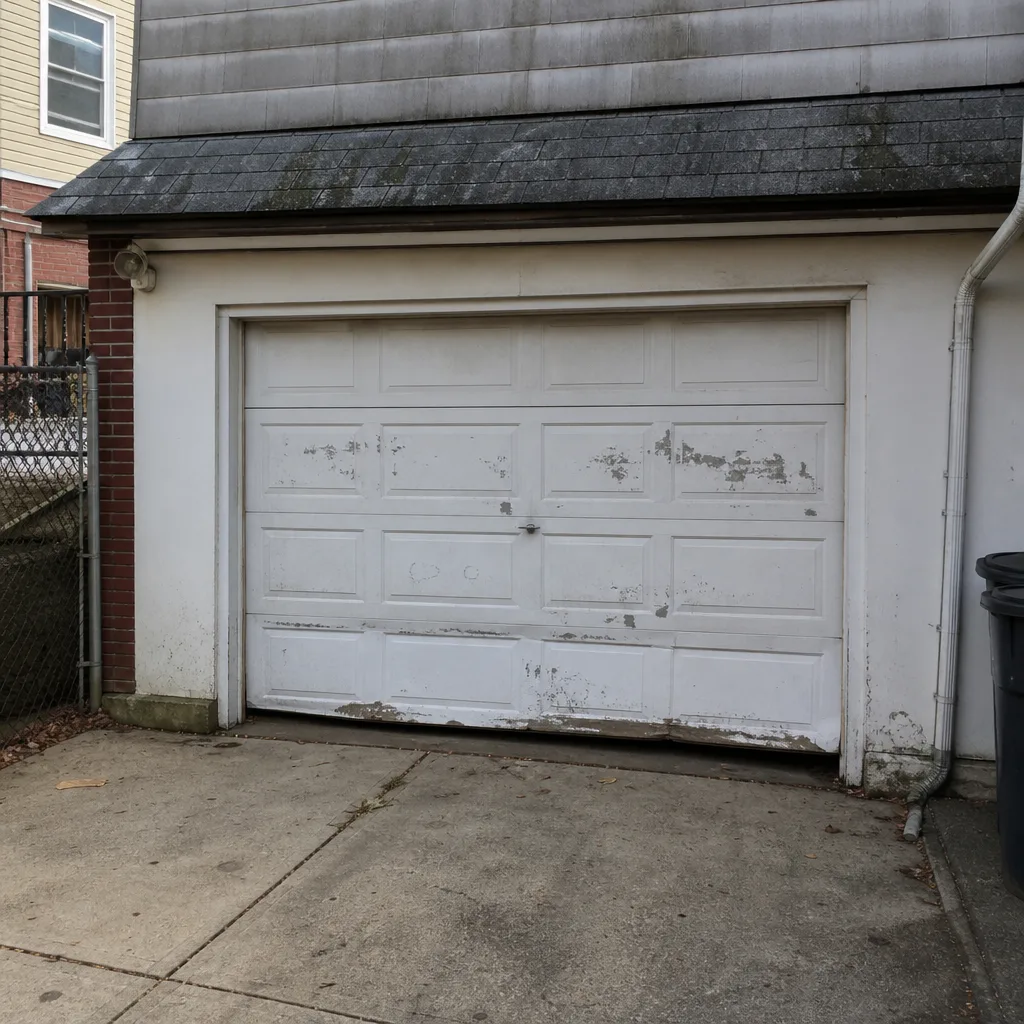 Before
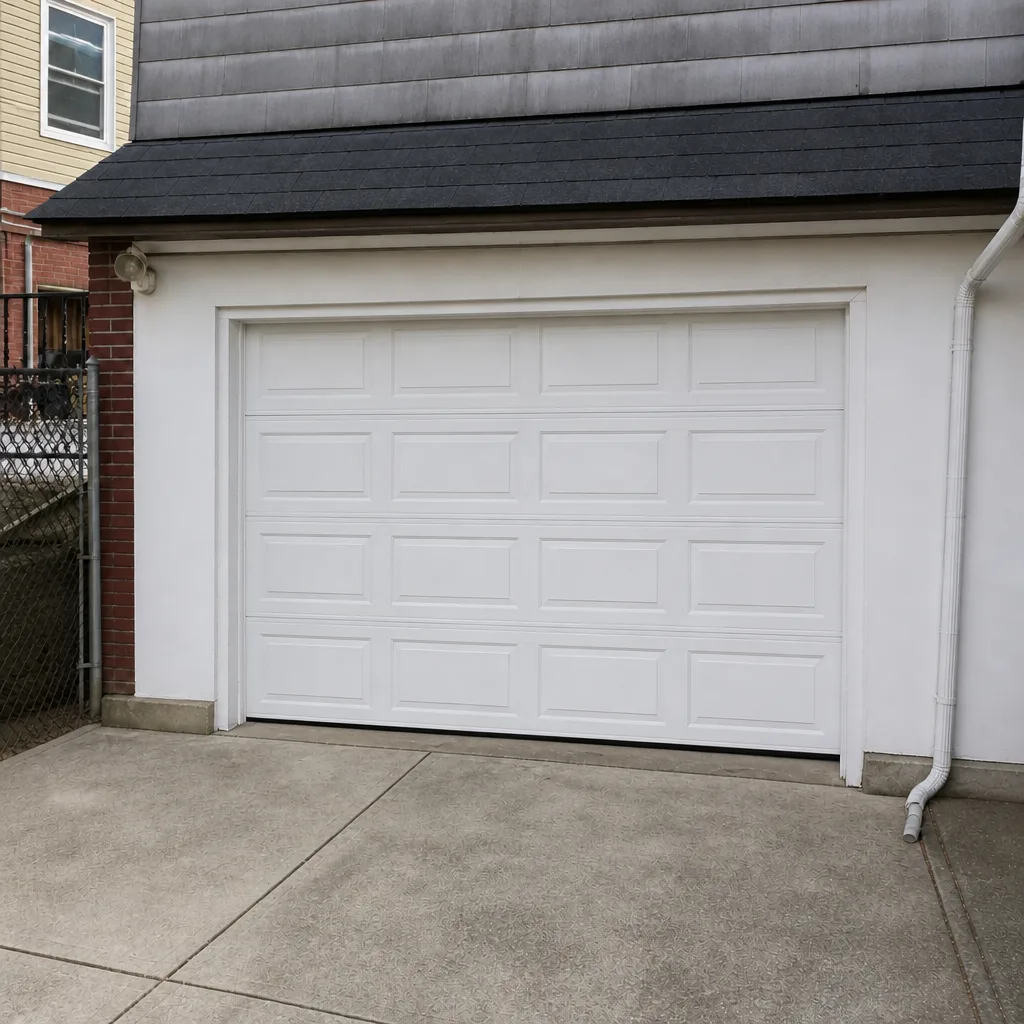 After
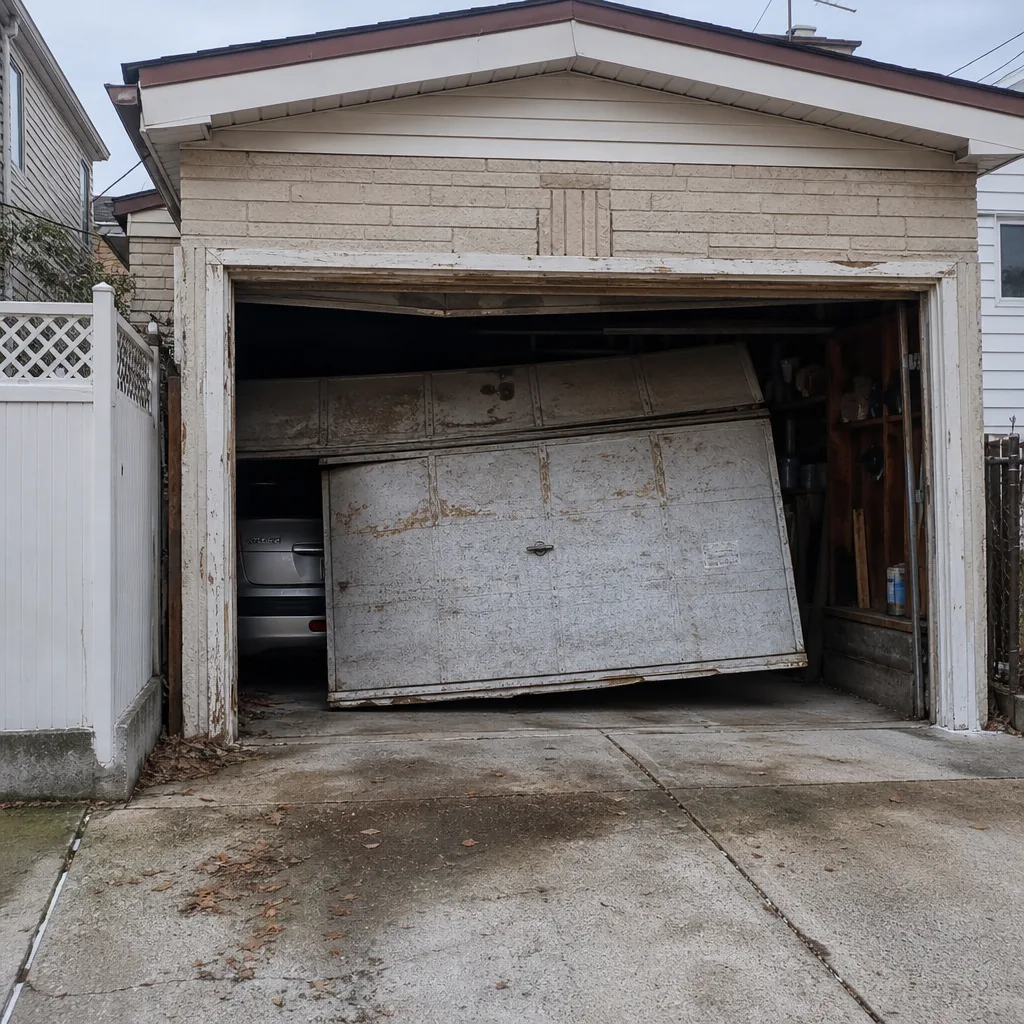 Before
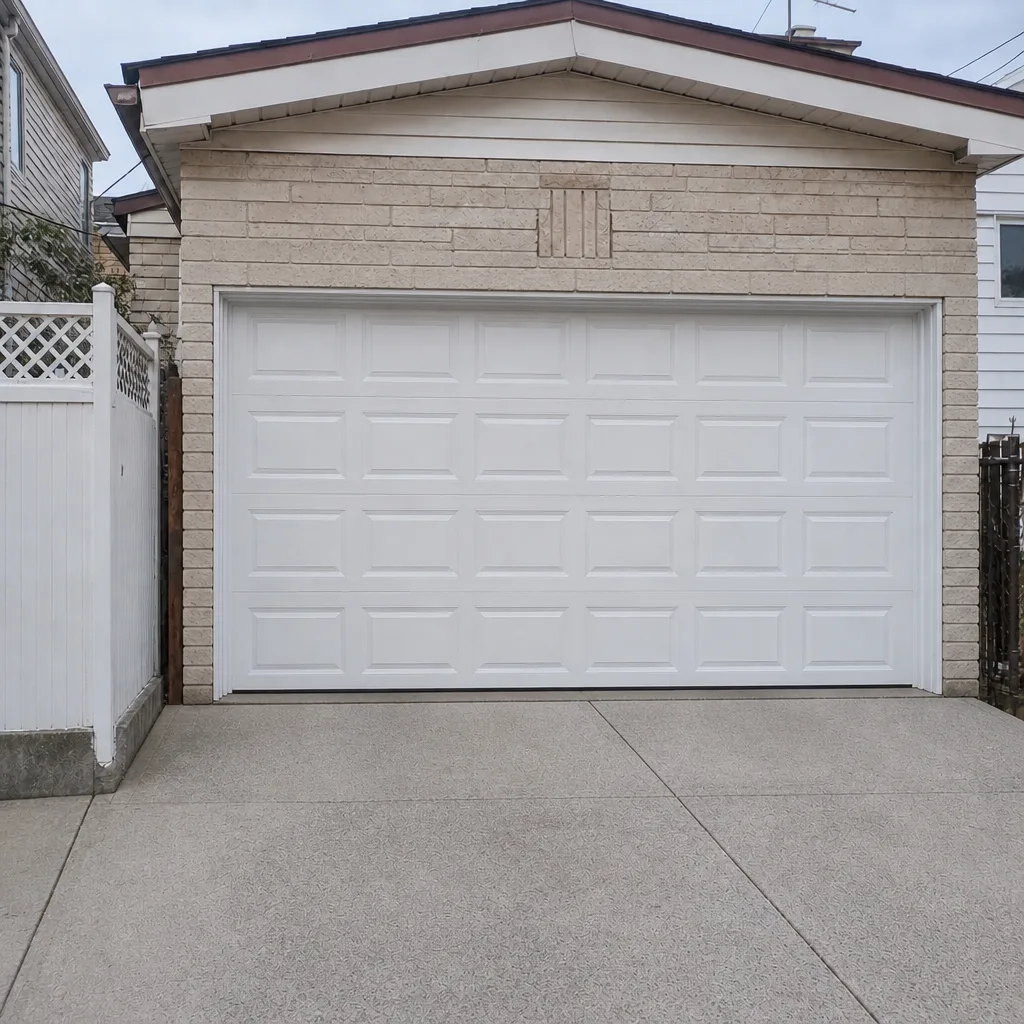 After
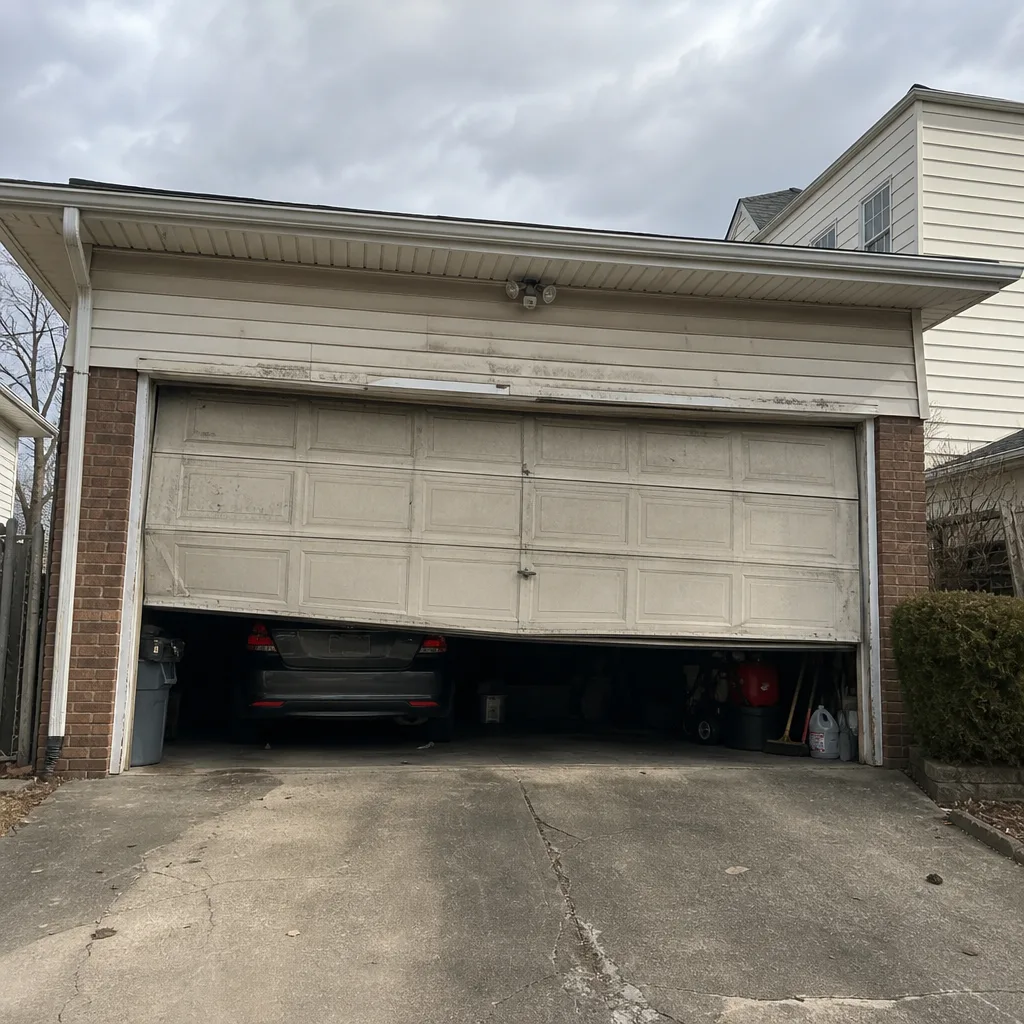 Before
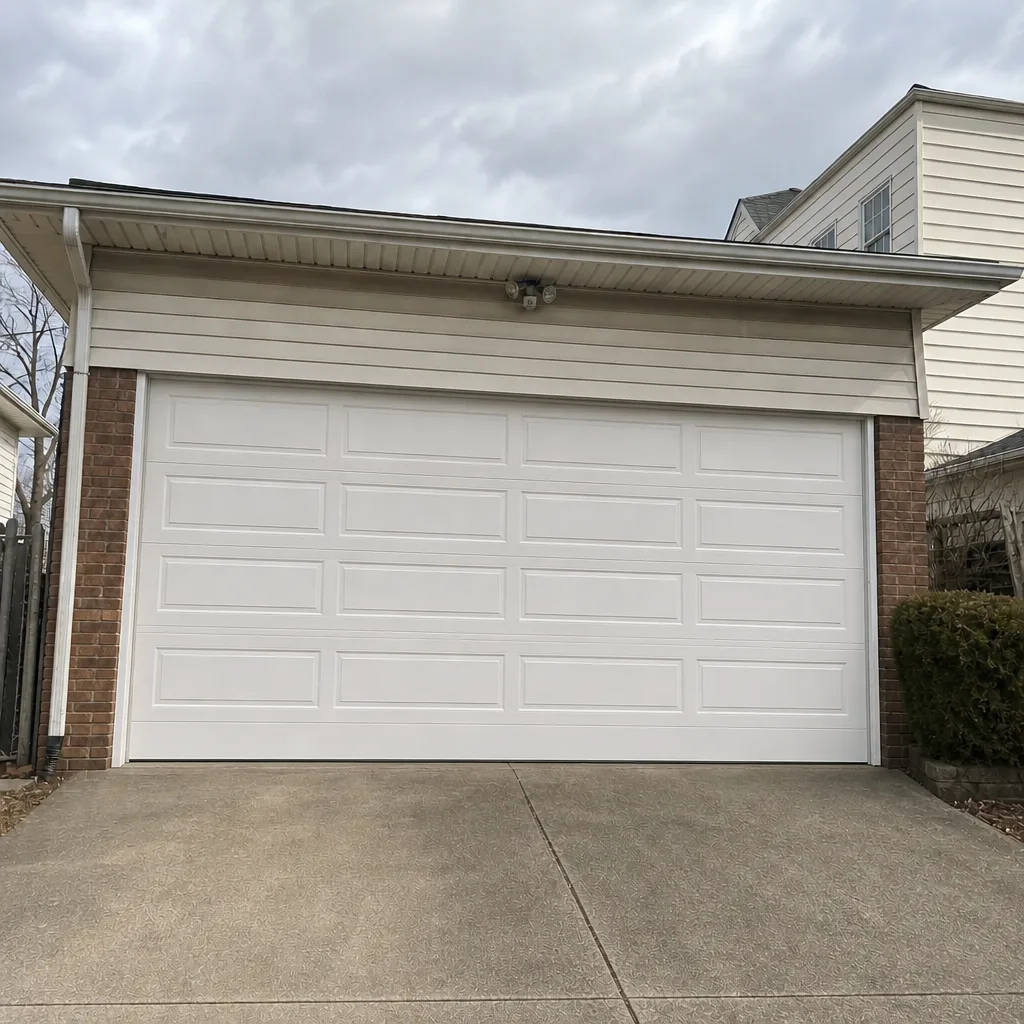 After
When to Call a Professional
Call a professional the same day if any of these are true: the door is uneven by more than an inch, the safety reverse fails the small-object test, you see coil separation on a spring, a cable shows visible fraying, the door won’t close, or the door bounces hard at the floor. Call sooner if the door is stuck open (security concern) or stuck closed with a car inside (access concern). For grinding noises that continue after a cycle, schedule a repair within the week; that gear or drive is on a clock. For surface rust and a squealing roller, schedule when convenient. When in doubt, call and describe what you’re seeing. Garage Door Repair Long Island City offers free estimates in Long Island City. Call (877) 549-7594, and we’ll help you sort the urgent from the routine. Our technicians have up to 12 years of experience, and if the door is beyond repair, we also handle garage door installation.
Frequently Asked Questions
The first sign is usually a hesitation before the door moves, a pause of half a second or so after the opener engages. That delay means the spring has lost some lift and the opener is doing extra work. In our experience the delay grows over 30 to 90 days before the door stops working entirely. Call (877) 549-7594 for an exact quote, and estimates are free.
Spring repair is priced per job by a written estimate, so the number depends on the door, the spring type, and whether one spring or a matched pair needs replacing. We don’t quote a fixed price over the phone because the door has to be measured and inspected. The written estimate sets the final price, and it’s quoted and agreed before any work starts. Call (877) 549-7594 for a free estimate.
Yes, in most cases. A door that won’t open or won’t close is treated as an urgent call, and we answer 24/7. Fast dispatch from 7am to 7pm, Sunday through Friday. A call outside dispatch hours is booked into the next opening. Same-day scheduling is normal for stuck doors in Long Island City. Call (877) 549-7594.
No, not after you’ve received a written estimate. The price is quoted and agreed before any work starts, and the written estimate sets the final price. If we find something that wasn’t visible on the first visit, we tell you before doing that additional work, not after. Call (877) 549-7594 to book an estimate.
The local pros we connect you with are licensed and insured as their state requires, and they specialize in garage door systems rather than general repair. Our technicians have up to 12 years of experience, and they’re familiar with LiftMaster, Chamberlain, Genie, Clopay, Amarr, Wayne Dalton, Craftsman, and Raynor equipment. Call (877) 549-7594 for a free estimate.
Once a month is right for most homes in Long Island City, and closer to every two weeks if the door faces a construction corridor or sits in a converted building with low clearance. The check is two minutes: watch a cycle, listen for new noises, read the LED, and look at the springs from a distance. Any change is worth a call. Call (877) 549-7594 and we’ll tell you whether it’s urgent.
The Bottom Line
The warning signs that matter most are the quiet ones: a half-second hesitation, a door that lands an inch off, a bounce at the floor, a patch of pitting on a spring, a new LED pattern. Each one opens a repair window. Each one closes eventually. Homeowners in Long Island City get the best outcome when they read the door monthly and call at the first change rather than the first failure. We work on the full door system, from springs to openers to panels to new installation, and we’d rather diagnose a small signal than respond to a snapped spring.
Call (877) 549-7594 for a free estimate. We answer 24/7, with fast dispatch from 7am to 7pm, Sunday through Friday.
Written by the team at Garage Door Repair Long Island City.