
Last updated November 21, 2026
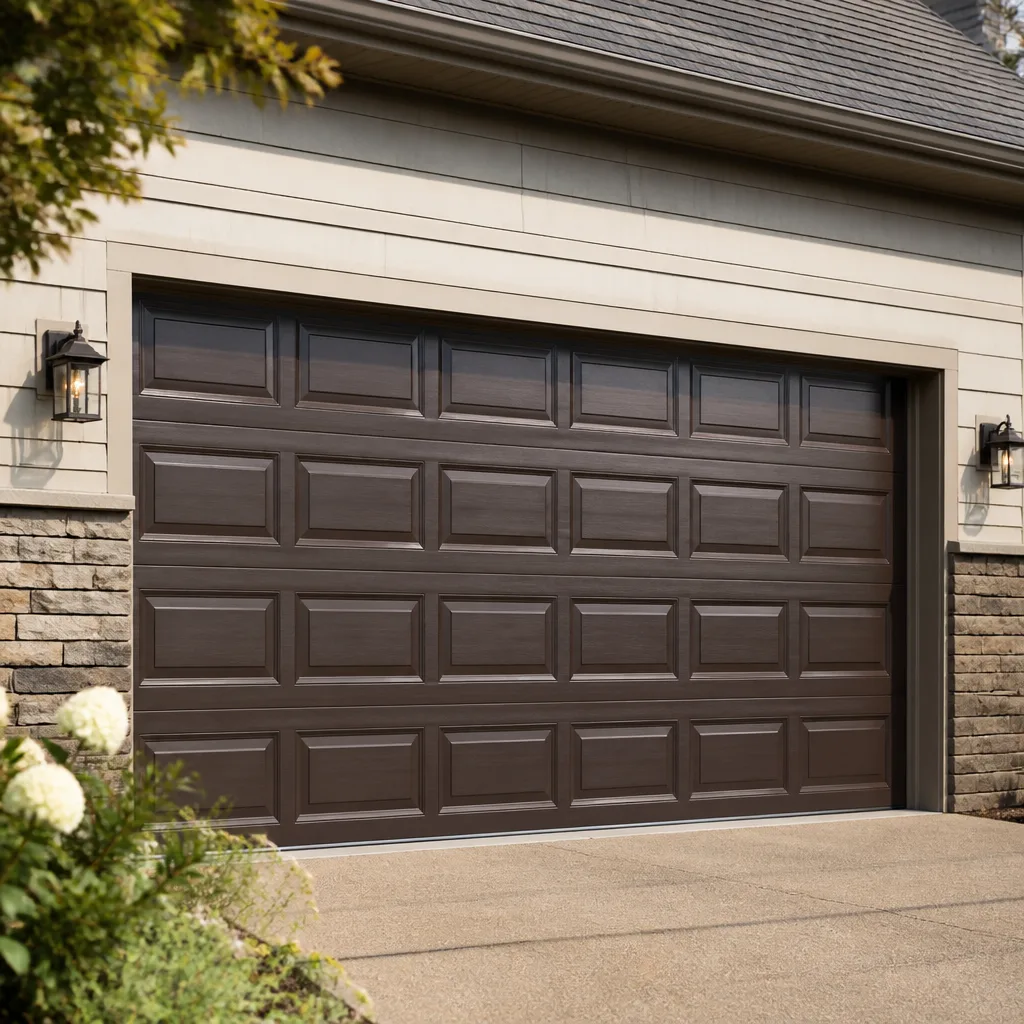 Raised-panel steel
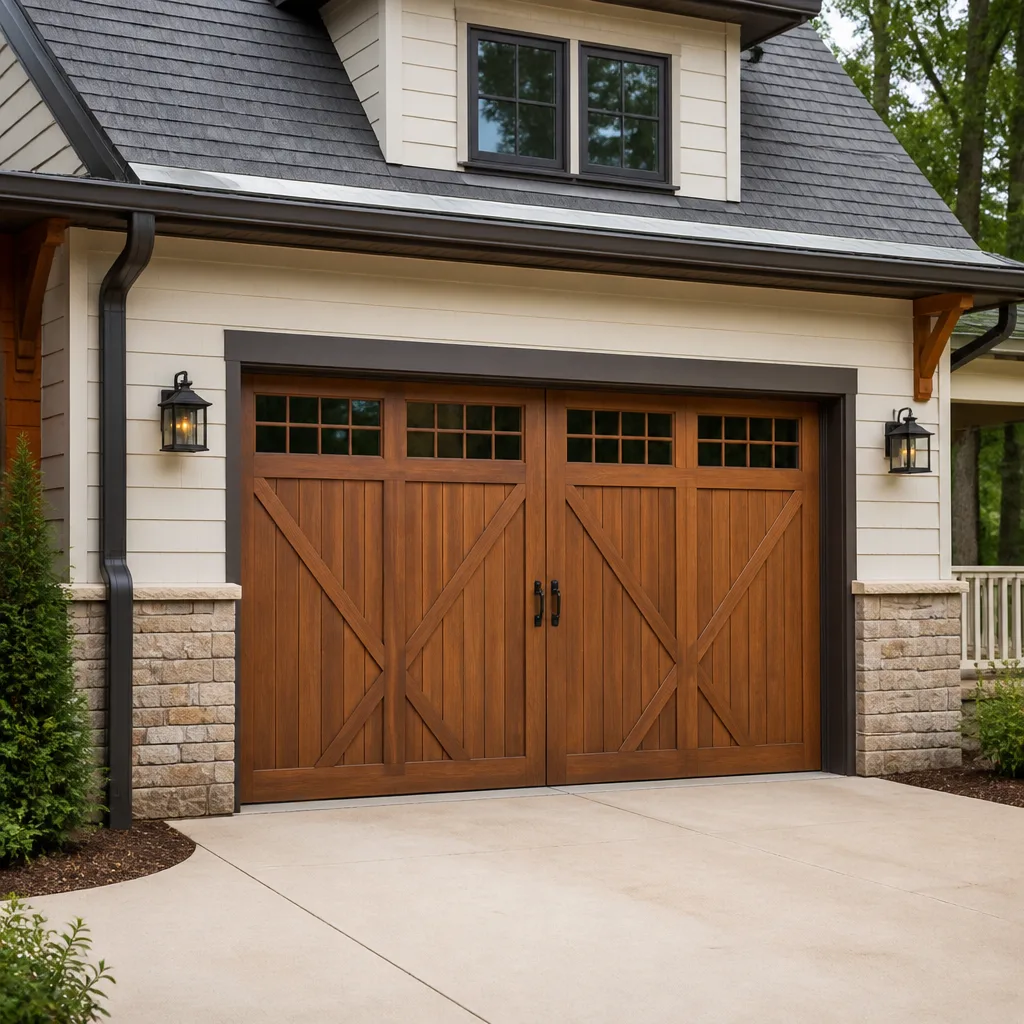 Carriage house
 Modern flush
 Full-view glass
 LiftMaster openers
 Chamberlain openers
Full 25-point door and opener safety check with every visit - springs, cables, rollers, tracks, and your LiftMaster or Chamberlain opener included
You get a price before we start. It does not change when the pro arrives.
Get your free estimateHow to Hire a Garage Door Contractor in Long Island City: A Step-by-Step Guide
A contractor who orders your spring from Amazon after the appointment isn’t a specialist. He’s a middleman with a screwdriver, and you’re paying for the round trip. The frustrating part is that on paper he looks the same as a real garage door pro: “garage door repair” on the website, a license number in the footer, a friendly phone manner. What separates them shows up later, when the spring arrives two days from now and the door is still stuck open. This guide gives you a vetting framework you can run in fifteen minutes, before anyone touches your door. We’ll cover licensing, insurance, brand fluency and the specific red flags we’ve watched trip up owners across Long Island City.
Quick Answer
To hire a garage door contractor in Long Island City, verify three things before you book: an active NYC Home Improvement Contractor (HIC) license checked on the DCA database, liability insurance that covers attached-structure work, and demonstrated familiarity with your exact opener and door brand. Then require a written scope of work with line-item pricing before any labor starts. A contractor who can’t clear those three checks is a generalist, not a specialist.
Styles & brands we work with
- Raised-panel steel
- Carriage house
- Modern flush
- Full-view glass
- LiftMaster openers
- Chamberlain openers
Table of Contents
- Why the Right License Matters More in Long Island City
- How to Verify a Contractor’s HIC License in 60 Seconds
- Insurance Minimums for Attached-Structure Work
- How to Test Brand Fluency Before You Book
- Red Flags Unique to the Long Island City Market
- How to Write a Scope of Work That Prevents Bait-and-Switch
- The High-Tension Spring Conversation You Need to Have
- Scheduling Emergency Service Without Getting Gouged
Why the Right License Matters More in Long Island City
New York City regulates home improvement work differently than most of the country. A contractor performing residential work here needs an active Home Improvement Contractor license from the NYC Department of Consumer and Worker Protection. That license isn’t a formality. It’s the mechanism that ties a contractor to a real legal entity, requires a surety bond, and creates a paper trail you can follow if a job goes wrong. A handyman working under a “handyman” label may be operating outside that structure entirely.
Why does this hit harder in Long Island City than in, say, a suburb upstate? Density and building type. Much of Long Island City is mid-rise and mixed-use, and the garage door on a townhome or a small residential building is often attached to a structure with living space above or beside it. That changes the risk profile. A spring failure on a freestanding suburban garage is a dangerous mechanical event. A spring failure here can also mean a door slamming into a shared wall, a parked car, or a neighbor’s property line. You want the contractor who understands that.
There’s a second Long Island City factor that people underestimate: property managers and building owners. If you manage a residential property here, you’re not hiring for one door. You’re hiring for a relationship, and you need a contractor whose license and insurance will satisfy your building’s requirements without a fight. A residential-focused garage door specialist should be able to hand you the documentation you need on request, and should be comfortable with property manager workflows. Ask about it directly. If a contractor seems confused about what a certificate of insurance is, that’s your answer.
The generalist failure isn’t malicious most of the time. It’s structural. A contractor who does garage doors one week and decks the next doesn’t carry the diagnostic habits a specialist builds over thousands of jobs. That gap shows up in what they don’t check. Here’s what a specialists’ diagnostic actually covers on a typical Long Island City call:
- The full door system: door panels, hinges, rollers, tracks, springs, cables, and the opener as one unit
- Brand-specific behavior: the exact error codes and known failure modes for your opener model
- Load distribution: whether a spring failure caused cable or drum damage that isn’t visible from the floor
- Building constraints: whether a replacement door can even get through the access path to your garage
That last point comes up more than you’d think in Long Island City. Door sizes, ceiling heights and access routes in older residential buildings here are not uniform, and a contractor who shows up expecting a standard flat ceiling and a straight run to a suburban driveway is going to improvise. Improvising on a torsion system is not a good outcome. When you’re vetting, ask how they handle non-standard installs. The specialist will have a process. The generalist will say “it depends.”
How to Verify a Contractor’s HIC License in 60 Seconds
You can confirm an HIC license without leaving your phone. The NYC Department of Consumer and Worker Protection runs a public license lookup at nyc.gov/dcwp, and you can search by license number or business name. It’s free, it’s official, and it takes about a minute once you know what to look for.
Here’s the exact sequence:
- Ask for the license number before the appointment. The contractor should give it to you without hesitation or a “let me get back to you.” A residential contractor doing this work should have it memorized or accessible.
- Open the DCA license lookup and enter the number or the business name.
- Check the status. It should say active. Expired, suspended or “not found” all mean the same thing for your purposes: no.
- Check the business name matches the one on your quote. If the name on the license and the name on the invoice don’t match, ask why. Sometimes it’s a DBA. Sometimes it’s a red flag.
- Note the license class. Make sure it covers the type of work you need, not just general handyman work.
We’ve watched homeowners get this step wrong in two ways. The first is accepting a verbal reassurance (“yeah, we’re licensed”) instead of a number. The second is checking a license number but not checking whether the license is actually active on the day of the job. Licenses lapse. Do the lookup close to the appointment, not a month in advance.
Beyond the license, ask for a certificate of insurance directly. A contractor should be able to have their insurer issue a COI listing you or your building as additionally insured. That’s standard on residential work, and it’s a document an insurance company issues quickly. If a contractor can’t produce a COI or asks you to take their word for coverage, move on. That’s not an administrative preference. It’s the thing that protects you if something goes wrong on your property.
For garage door work specifically, ask about their licensing situation in plain terms. Spring and opener work is mechanical, it’s done at height, and it involves stored energy. The person doing it should be operating under a licensed business, not as a solo operator with a truck and a phone number. If you want a same-day diagnostic first, our Garage Door Repair Long Island City page lays out the repair scope and what to expect.
Insurance Minimums for Attached-Structure Work
Insurance requirements for garage door work in New York City are different from what you’d expect in the suburbs, because the work touches attached structures. In much of the country, a garage is detached, and a failed spring or a door that comes off its track damages a door and a concrete slab. In Long Island City, the garage is frequently part of the building envelope. A door failure can affect a party wall, a shared ceiling, a car in an adjacent bay, or a pedestrian area outside.
Here’s what to require from the contractor’s insurance before work starts:
- General liability coverage. Ask for the policy limit. For attached-structure work in a dense urban building, you want to see a meaningful limit, not a bare minimum. If a contractor can’t tell you the limit, that’s a problem.
- Workers’ compensation coverage. If a technician is injured on your property, workers’ comp is what keeps you out of a liability claim. If the contractor has no employees, that’s a separate conversation, but a business doing residential work in NYC should be able to answer this clearly.
- A certificate of insurance listing you or your building. This is the document you want in your inbox before anyone steps on your property.
- A named insured that matches the contracting party. If the insurance policy is in a different name than the business you’re paying, find out why before the job.
The reason this matters differently in Long Island City than in the suburbs comes down to what’s at stake. A general liability policy that would be perfectly adequate for a detached garage on a half-acre lot may not be adequate for a door that’s part of a residential building with neighbors below. Property managers here should treat the COI requirement as non-negotiable. For an owner-occupied townhome, the standard is still higher than a suburban job, but the practical question is simpler: does the contractor carry liability coverage that would cover damage to your building, and can they prove it?
Ask the question this way: “Can you send me a certificate of insurance showing your general liability limits, with me listed as additionally insured?” The response tells you more than the policy number. A specialist answers without friction. A generalist has to check with someone, or has a policy that doesn’t cover residential garage work, or doesn’t have one at all. All three are your signal.
How to Test Brand Fluency Before You Book
Brand fluency is the easiest thing to test and the hardest thing to fake. Every contractor will say they work on all major brands. The question is whether they can talk about your specific unit’s behavior without looking it up. That gap is where the middleman shows up.
The single best test: give them the model number of your opener and ask about the specific error code or symptom you’re seeing. If your LiftMaster is blinking four times and the door won’t close, that means something. If your Chamberlain is beeping and reversing, that means something. A specialist will translate the symptom directly. A generalist will say “sounds like a sensor” and schedule a visit to figure it out on site.
Here’s what brand fluency looks like in practice:
- Opener logic: A pro can tell you the difference between a Chamberlain and a LiftMaster diagnostic sequence, because the two share a parent company but differ in accessory behavior and error reporting. They know Genie’s belt and chain drive quirks. They can recognize a legacy Craftsman unit without seeing the label, and they know whether Raynor’s commercial-adjacent hinge patterns apply to a residential install.
- Door manufacturer behavior: Clopay and Amarr panel sizes, track profiles and hinge styles aren’t interchangeable. A contractor who installs one size of panel and assumes it fits the others is going to be back at the hardware store mid-job. Ask how they handle a Clopay panel replacement where the model is discontinued.
- Smart-home integration: If your opener is a LiftMaster or Chamberlain with built-in Wi-Fi, a specialist knows how to diagnose the network side of the problem and not just the mechanical side. If the door works but the app doesn’t, you don’t want someone who replaces your opener because they can’t debug the connection.
The reverse test is just as useful. Ask a contractor to name your opener’s brand without looking at it, over the phone, based on the symptom alone. A real specialist asks one or two clarifying questions (age of the unit, whether there’s a battery backup, the color of the wall button) and then names the likely model family. That’s not a party trick. It’s the diagnostic process working in real time.
We’re factory-familiar with Clopay, Amarr, Wayne Dalton, Raynor, Genie, Craftsman, LiftMaster and Chamberlain, and the reason we mention that isn’t to name-drop. It’s that when a customer calls with a Chamberlain opener, we can name the likely issue before we see the unit because we’ve worked through that error sequence enough times. That’s the difference between a specialist and a middleman. Our technicians have up to 12 years of experience with the full door system, from the opener logic down to the torsion springs. If your opener isn’t the problem, our garage door opener repair page covers the diagnostic path for the main smart-home brands.
Red Flags Unique to the Long Island City Market
Long Island City has its own contractor ecosystem, and some of the usual warning signs show up here in ways they don’t elsewhere. Here are the ones we’d want a friend to watch for.
1. Quote over the phone without a site visit
A phone quote for a spring replacement is a guess, not a price. Springs are rated by cycle life and door weight, and cable or drum damage changes the scope entirely. The only way to price a spring replacement accurately is to see the door and count the problems. A contractor who’ll quote a firm number over the phone is either guessing or planning to revise it on site.
2. Won’t pull permits when the job needs them
Not every garage door repair needs a permit. Some installations and structural modifications do. Ask the contractor how they handle permitting for your specific job. A specialist knows when a permit is required and knows the process. A generalist will tell you it’s not needed or that they’ll “handle it” without specifics. Ask your building’s management and check with the NYC Department of Buildings if you’re uncertain. The city’s website lists what requires a permit. The contractor should be able to tell you its position on this before you sign.
3. Subs the job out immediately
Some contractors book the appointment and dispatch a subcontractor who has never spoken to you and doesn’t know your door. The person who answers the phone should know who’s coming to your property and should be able to describe their background. If they can’t, you’re dealing with a dispatcher, not a specialist. That’s not always fatal, but the accountability chain gets longer and blurrier. Ask directly: “Will the person coming be your technician or a subcontractor?” You’re allowed to have a preference.
4. No parts strategy
Ask how they’ll handle your spring order. A specialist carries common spring sizes or has a local supplier relationship that gets them on site with the right part the same visit. A middleman orders from an online retailer after the appointment and comes back in two or three days. That gap is the difference between back in service today and back in service next week. For a garage door that’s the only access point to a car, two days matters.
5. Pressure for a full replacement when a repair would do
Sometimes a replacement is the right call. Rusted-out bottom sections, a door that’s been hit by a car, a model that hasn’t had a compatible part in years. But a spring replacement is not a full-door replacement. If the first thing a contractor says on arrival is “you need a new door,” get a second opinion. The reverse is also true: a contractor who patches a door that’s failing structurally is selling you a spring and a bill. A specialist tells you which one you’re looking at and why. Our garage door installation page covers what a full replacement involves if that’s where the diagnosis lands.
How to Write a Scope of Work That Prevents Bait-and-Switch
The written scope of work is your defense against the invoice that shows up bigger than the quote. It’s also the single most-mishandled document in this industry. A proper scope of work for garage door service should specify the following, in writing, before labor starts:
- The exact component(s) being replaced. Not “springs” as a category. The specific spring count, size, cycle rating, and whether the work is torsion or extension.
- Whether the price is per spring or for a matched pair. Springs are typically replaced as a matched pair, and a pair costs roughly twice a single spring. Get this in writing with the count explicitly listed. If a contractor quotes one spring price and installs a pair at a higher number on the invoice, you have a dispute. The written quote is the price.
- Cables and drums, called out separately. Cable failure often accompanies spring failure. Ask whether the quote includes cable replacement, drum inspection, and hinges. If it doesn’t, ask how the contractor handles it if they find cable damage mid-job. The answer should be a written re-quote before work continues, not a surprise line item.
- Opener components, if any. If the opener is being repaired, list what’s being replaced: gear kit, logic board, travel module, safety sensors, remote or wall button.
- The diagnostic visit outcome. If the appointment is a diagnostic, the scope should say what the technician will inspect and what the next step is if a repair is required.
- The price and the payment terms. The quoted price should be the final price for the listed scope. If the scope changes, the price changes, but only after you’ve agreed to the new scope in writing.
The bait-and-switch pattern is easy to spot once you know what you’re looking for. It usually involves an initial quote that covers one spring when the door needs two, or a spring repair that doesn’t mention the cable damage that any thorough inspection would find. On the invoice, the missing items appear as charges. The fix is to have the contractor specify in the scope what “complete” means for your job. Ask: “What will you find mid-job that isn’t on this quote, and how do we handle that?” A specialist will tell you the likely candidates (cables, rollers, hinges, drum wear) and the process. A middleman will say “don’t worry, we’ll talk about it on site.”
Spring pricing in Long Island City sits in a range that varies by door weight, cycle rating, and whether it’s torsion or extension. We won’t pretend a phone quote is precise. What we will do is set the price per job with a written estimate before any work starts, and if the scope changes after inspection, you’ll see the new line items in writing before the technician proceeds. The written quote is the price. If you’re dealing with a rare-size spring or a non-standard door, the estimate process will tell you which parts are available locally and which need to be ordered. You can call (877) 549-7594 for a free estimate on the scope.
The High-Tension Spring Conversation You Need to Have
Springs are the part of the garage door system that actually scares people, and the fear is deserved. A torsion spring under load stores enough energy to cause serious injury, and extension springs on side-mount doors are just as dangerous. This is the one part of the vetting conversation where you should not accept hedge words. Either the contractor is trained and equipped for high-tension work, or they aren’t.
Here’s what to confirm before anyone touches your springs:
- They know your system type. Torsion springs mount above the door on a shaft. Extension springs run alongside the tracks. The repair procedure and the risk profile are different, and the contractor should name which system you have before they quote.
- They won’t suggest you DIY. If a contractor hands you a winding bar and a video link, that’s an immediate no. Spring work requires the right tools and the right training, and no responsible professional walks a homeowner through it. We don’t, and neither should anyone else.
- They inspect cables and drums at the same time. A failed spring often declares itself, but the cable and drum damage it caused may be invisible until the door is under load again. A specialist examines the full spring assembly and quotes the whole scope, not just the broken part.
- They’re set up for the work today. Because springs are the most common failure, a specialist has a parts strategy that gets them back on site with the right spring. That’s the difference between same-day and same-week. If you’re already limping along with a door that won’t open, you don’t want to wait on an online order.
One more thing about spring pricing. When you see a number quoted for spring repair, ask what it covers. A single-spring quote is for one spring. If your door uses a matched pair, expect the pair price to be roughly double. A contractor who quotes a pair price and installs one spring, or quotes a single-spring price and invoices for two, is not giving you a written scope you can hold them to. That’s why the written estimate matters more here than on any other service call. For the full diagnostic picture on a spring or cable failure, our garage door repair page covers what a complete repair visit includes.
Scheduling Emergency Service Without Getting Gouged
A garage door that’s stuck open or off its track is a security problem for the building and a practical problem for your car. That urgency is exactly what a bad actor counts on. The vetting you do in the calm moments is what protects you in the urgent ones.
The contract terms don’t change when work is urgent, and neither should the vetting. Whatever price you’re quoted is a written estimate. The scope items above still apply. A contractor who shows up in a rush and asks you to sign a blank work authorization is not treating you like a customer. Here’s the process for a good emergency call:
- Describe the symptom clearly. “Door won’t close,” “door is hanging on one side,” “cable snapped,” “opener beeps but doesn’t move.” The better the symptom description, the better the diagnostic the technician can run on arrival.
- Ask for a written estimate before the technician starts work. Same rule as a scheduled visit. Free estimate, price per job, written scope.
- Confirm the parts situation. A same-day repair depends on the right part being available. Ask whether the technician will have the common springs for your door on arrival or whether the repair is scheduled for a follow-up visit.
- Get the invoice itemized. Line items, matched to the estimate. If anything on the invoice doesn’t match the estimate, ask about it before payment. Nothing on this list is exotic, and a specialist expects the question.
Long Island City properties have one more consideration on emergency work: access. A townhome on a side street, a residential building with a garage accessed from a rear courtyard, a door that needs to be parked on the street outside a shared bay. When you call, mention the access and where the vehicle will be during the repair. A specialist will plan for it before arrival, not after. Emergency availability is a dedicated service for us, not a reluctant callback. We answer 24/7. Fast dispatch from 7am to 7pm, Sunday through Friday. Call (877) 549-7594 for the estimate process.
Common Mistakes to Avoid
- Accepting a verbal license claim. “We’re licensed and insured” is not a license number. Ask for the number and check it on the NYC DCA database yourself. If the contractor is defensive about this, that’s the answer.
- Quoting over the phone without a diagnostic. Spring and cable pricing depends on door weight, cycle rating, and collateral damage. A firm number from an owner describing the symptom over the phone is a guess, and the “revised” price at the door is where the surprise shows up.
- Trusting a “garage door repair” service page on a general handyman site. The page is a service listing, not proof of specialization. Ask what brands they work on and what their diagnostic process is. The answer reveals more than the website does.
- Skipping the written scope of work. A quote that says “spring replacement” without specifying count, type, and cable inspection is an open door for a bigger invoice. Get the count, the size, and the collateral inspection in writing.
- Assuming a pair-spring job costs the same as a single spring. Matched pairs are usually replaced together, and the pair price is roughly twice the single-spring price. If a quote doesn’t specify which, ask before booking.
- Letting a contractor handle permitting without confirming it’s being handled. Not every job needs a permit. Some installations do. Ask the contractor their position and confirm with your building management or the NYC Department of Buildings if the answer is unclear.
- Not confirming who’s actually coming to the property. If the contractor on the phone and the technician at your door are different people from different companies, you’re dealing with a subbed job. Ask the direct question before you book.
See the difference
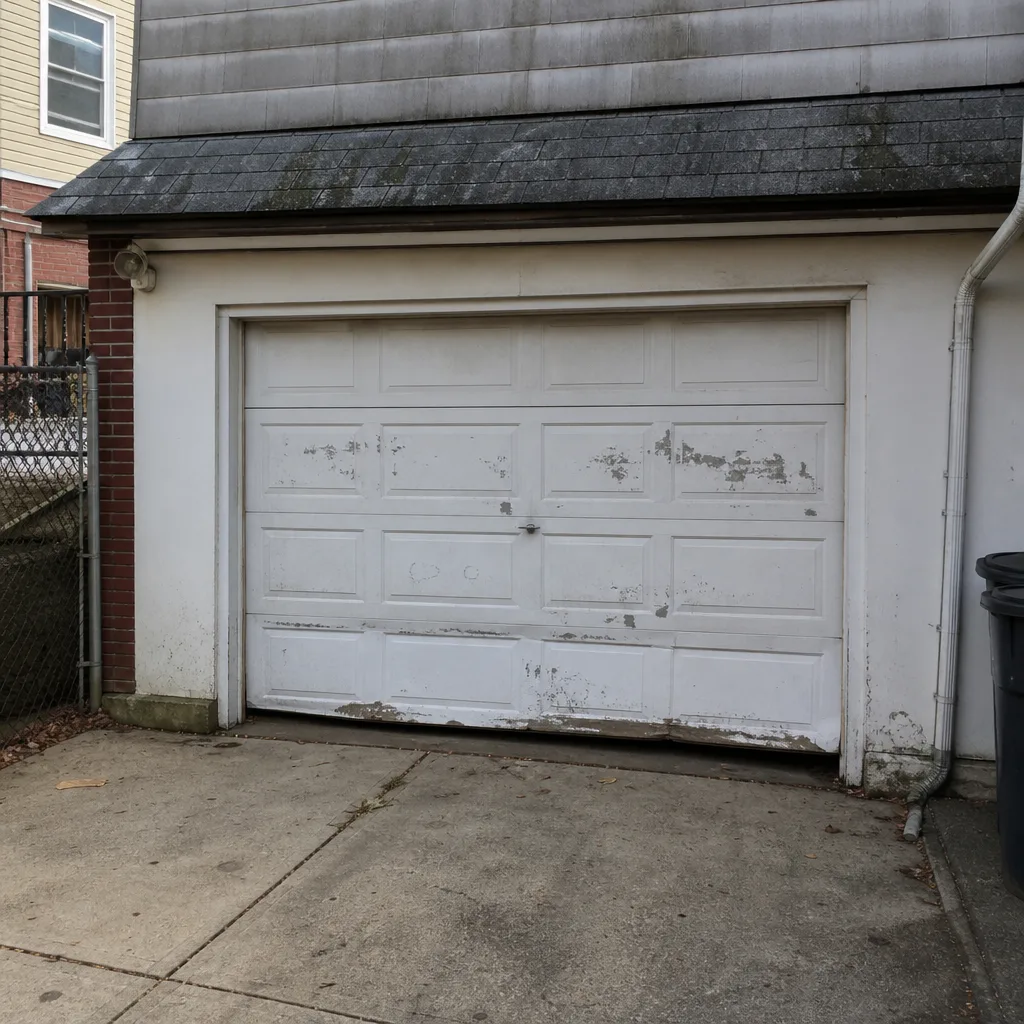 Before
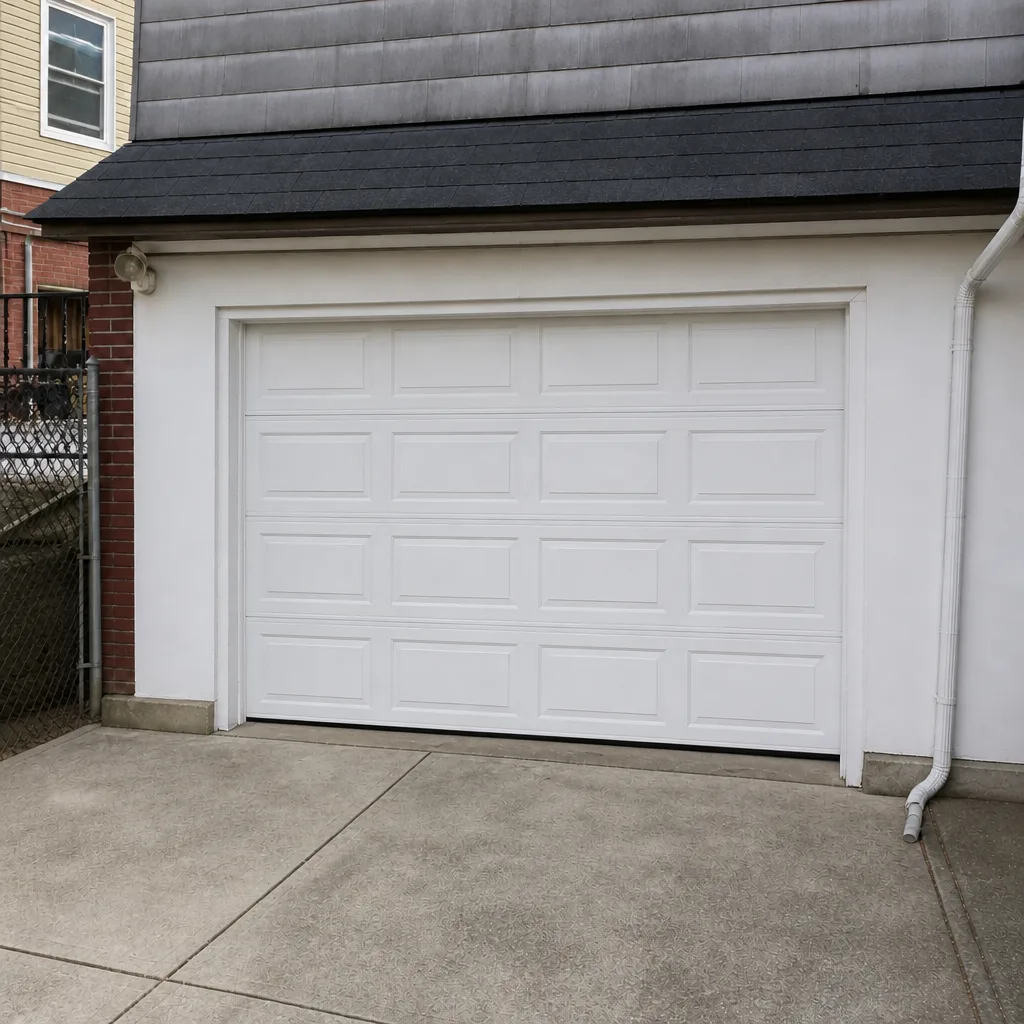 After
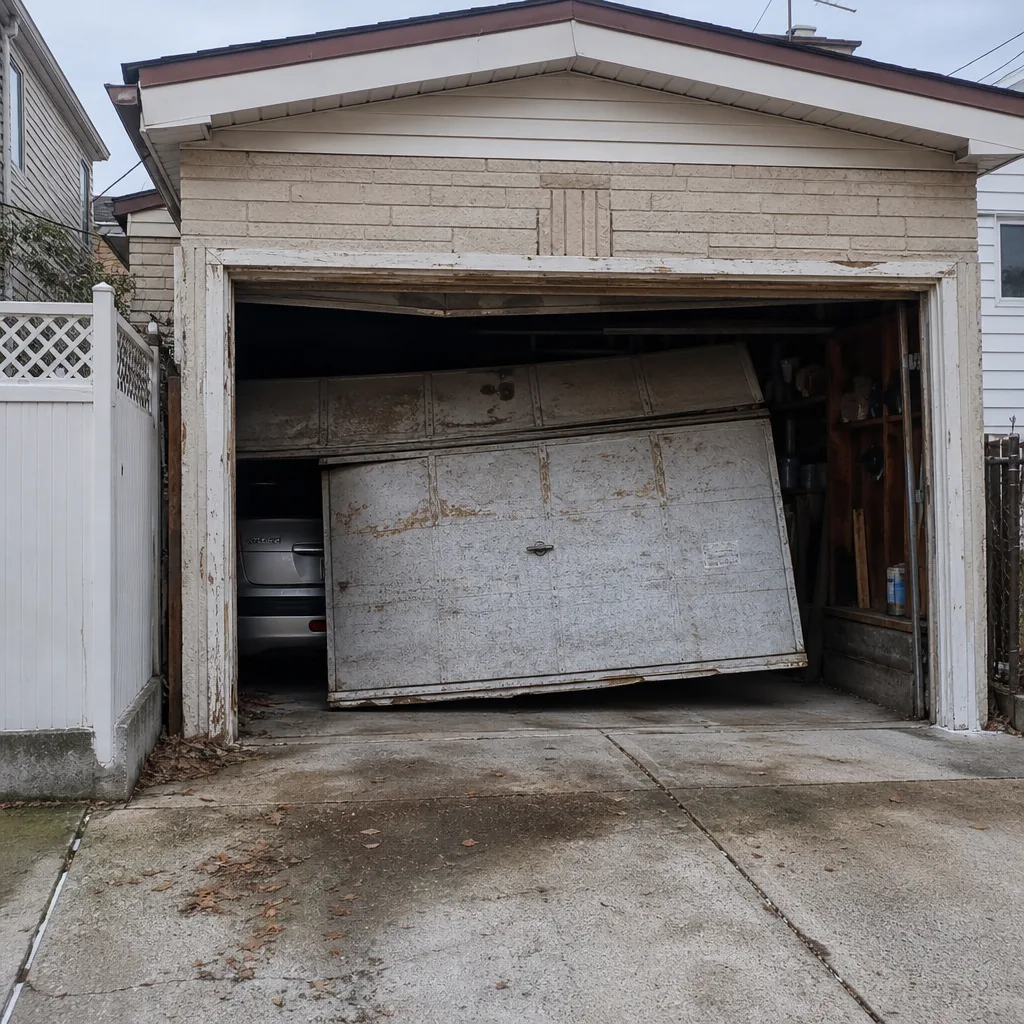 Before
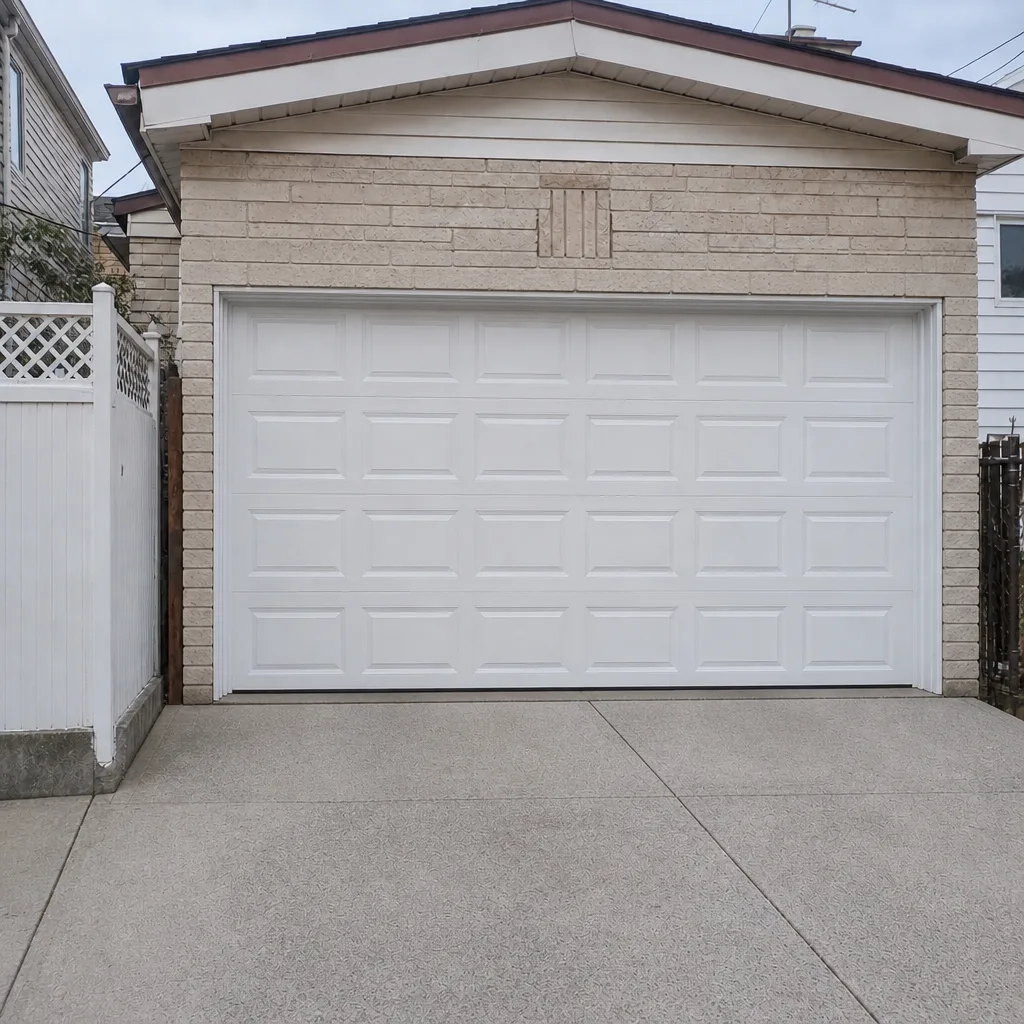 After
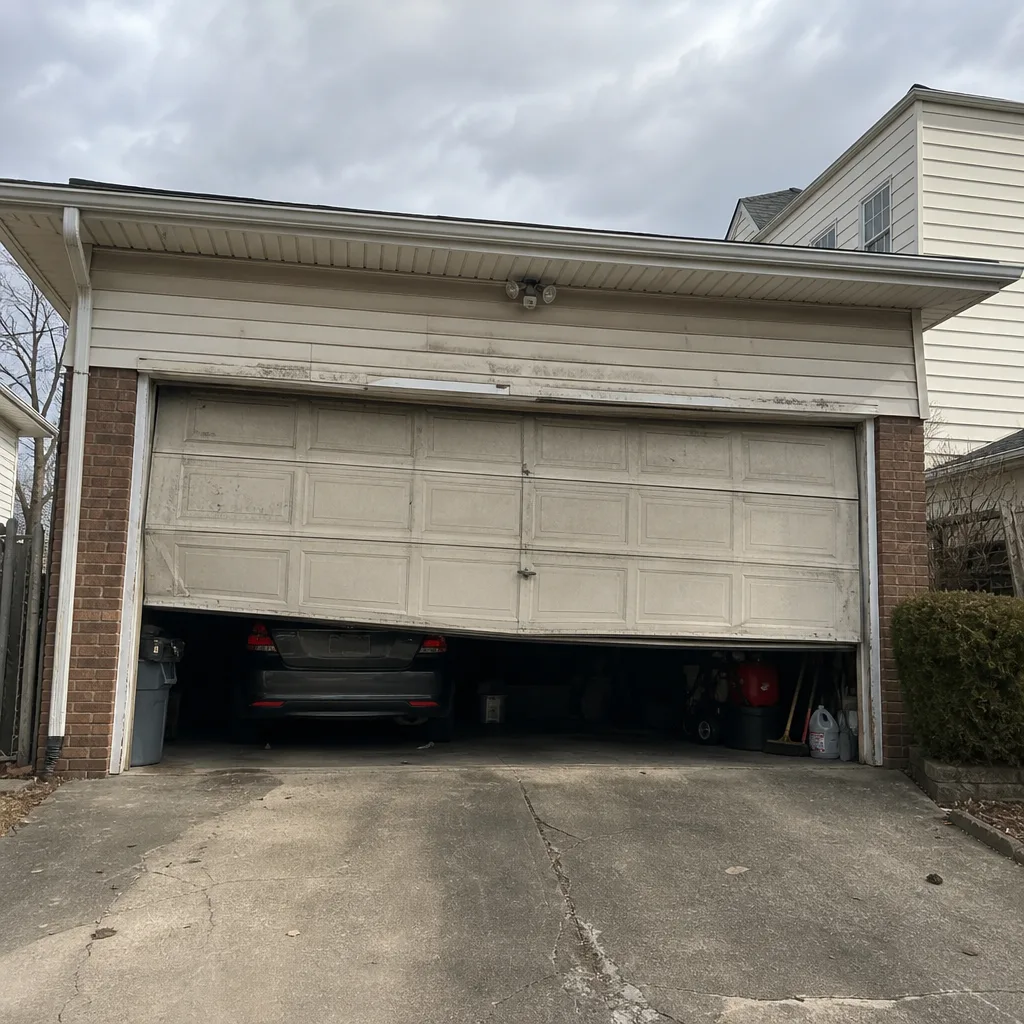 Before
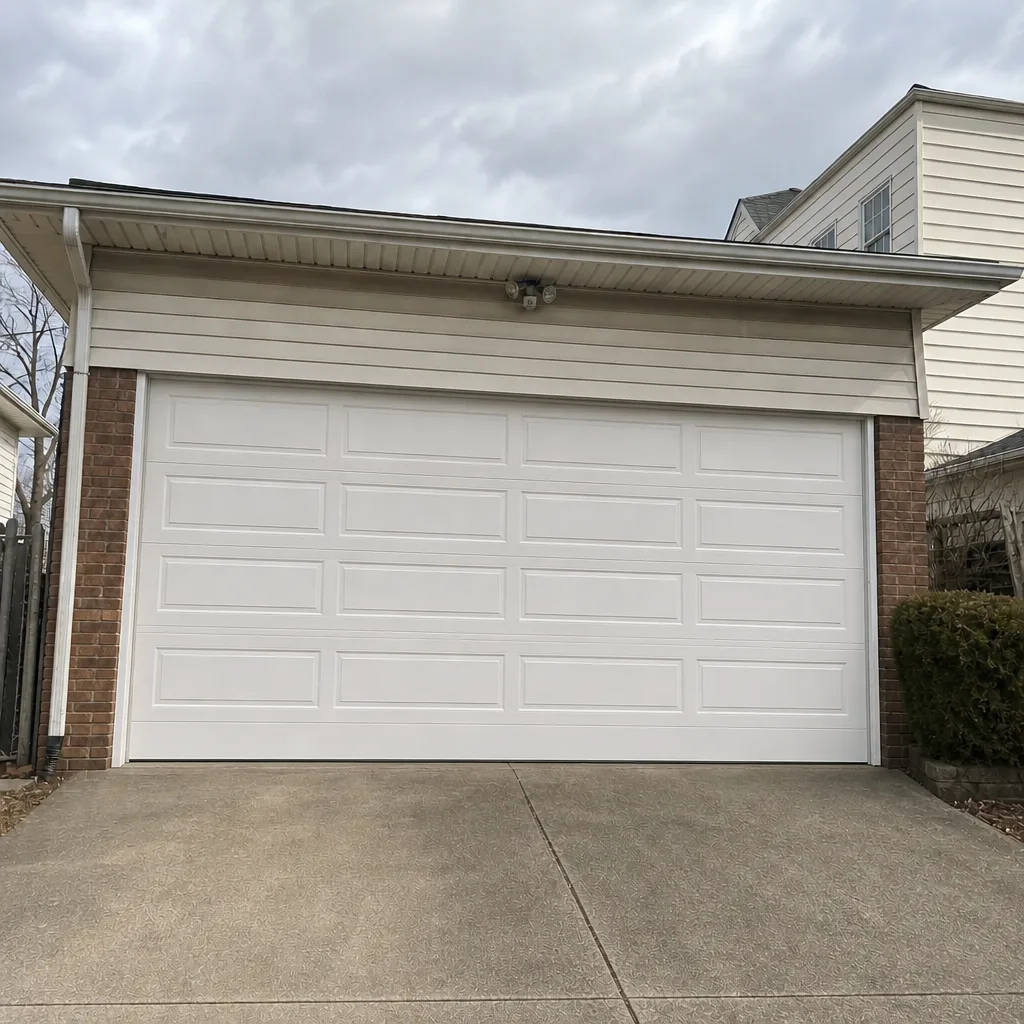 After
When to Call a Professional
Some garage door problems can wait for a scheduled appointment. Others can’t, and knowing which is which saves you from making a bad situation worse. Call a professional immediately if the door is off its track, if a cable has snapped, if the spring assembly has visibly failed, or if the door is hanging unevenly and won’t close fully. A door that won’t close is a security exposure for the building, and a door that’s partially open under load is a mechanical hazard. Don’t try to lift a door with a broken spring by hand, and don’t run the opener repeatedly to force it. Both put you in contact with the stored energy the springs are holding.
Scheduled service is the right call for a door that’s noisy, one that’s slow to reverse, a remote that’s stopped responding, or an opener that’s beeping more than usual. These are the early signals that a specialist can diagnose before the failure. Garage Door Repair Long Island City offers free estimates in Long Island City. Call (877) 549-7594. We answer 24/7. Fast dispatch from 7am to 7pm, Sunday through Friday.
Frequently Asked Questions
Yes. Residential home improvement work in New York City requires an active Home Improvement Contractor license from the NYC Department of Consumer and Worker Protection, and garage door repair falls within that scope. Ask for the license number and verify it on the DCA database before you book. Call (877) 549-7594 for a free estimate.
Spring repair is priced per job based on door weight, spring type and cycle rating, and whether a matched pair is being replaced. A single spring is typically a fraction of the price of a pair, since pairs are usually replaced together. The written estimate sets the final price before any work starts. Call (877) 549-7594 for a free estimate.
A specialist can name your opener’s brand and model family from your symptom description alone and can explain the diagnostic differences between brands. A generalist asks what kind of door you have and schedules a visit. Ask about the specific error code on your unit and see whether the answer is direct or deflected. Call (877) 549-7594 if you want to talk through the symptom.
Ask for a certificate of insurance showing general liability limits, with you or your building listed as additionally insured. For attached-structure work in Long Island City, the coverage should be meaningful enough for a residential building, not just a bare minimum. If a contractor can’t produce a COI or asks you to take their word for it, look elsewhere.
Same-day repair depends on the symptom and parts availability. Common spring and opener repairs can often be completed in one visit when the right parts are on hand. Emergency calls are handled as a dedicated service. We answer 24/7. Fast dispatch from 7am to 7pm, Sunday through Friday. Call (877) 549-7594 for the estimate process.
The written estimate sets the price. If the inspection turns up additional work, such as cable or drum damage found during a spring repair, you see the new line items in writing before the technician proceeds. Nothing is added to the invoice without an agreed scope. Call (877) 549-7594 for a free estimate.
The Bottom Line
The contractor you want for garage door work in Long Island City clears three checks before anyone touches your door. First, an active HIC license you verified yourself on the NYC DCA database, not one you took on faith. Second, a certificate of insurance that matches the risk of attached-structure work in a dense residential building. Third, brand fluency you tested with a specific error code or symptom, not with a vague “we work on all brands.” Then you get a written scope of work with spring counts, cable inspection, and line-item pricing before labor starts. If a contractor resists any part of that, you’ve learned something useful before the invoice, not after. When you’re ready to have a specialist look at the door, call (877) 549-7594.
Written by the team at Garage Door Repair Long Island City.