
Top Signs You Need Garage Door Service – Don’t Ignore These
A garage door that’s slightly slower than it used to be isn’t a minor annoyance. It’s often the first measurable symptom of a torsion spring that’s lost 15-20% of its tension and is weeks away from snapping under load. The warning signs homeowners usually notice (noise, slowness, a little cosmetic damage) are rarely the actual problem. They’re the downstream signal of a mechanical failure that’s already been developing quietly on a system under constant tension. Here’s how to read the right indicators, not just the obvious ones. And if you’d rather not diagnose it yourself, call (877) 549-7594 for a free estimate.
Why the Obvious Signs Are Usually Late Signs
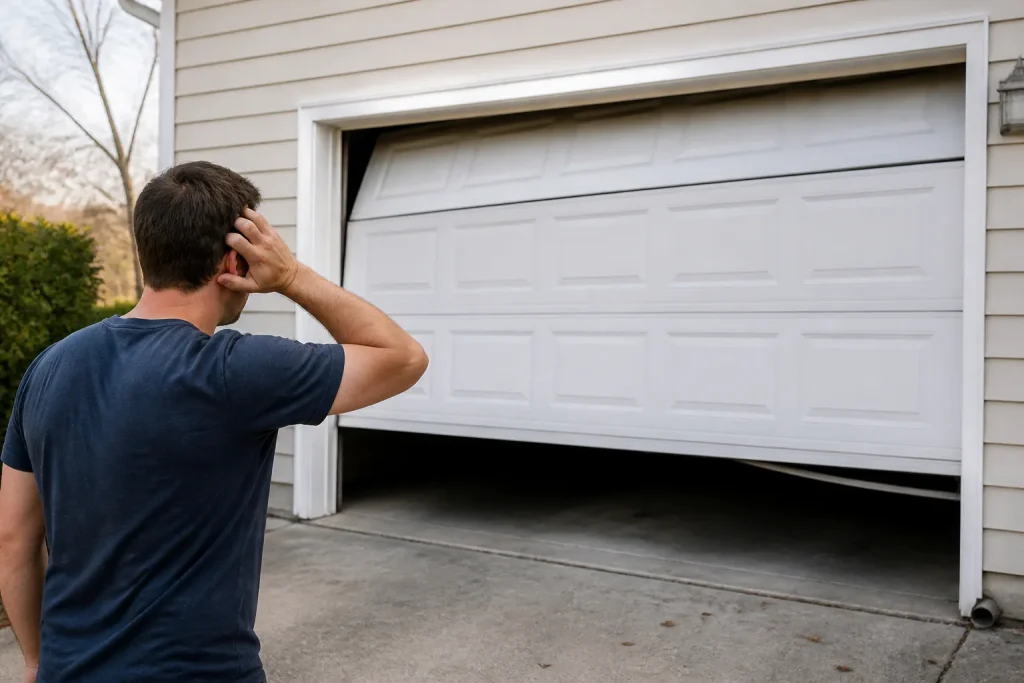
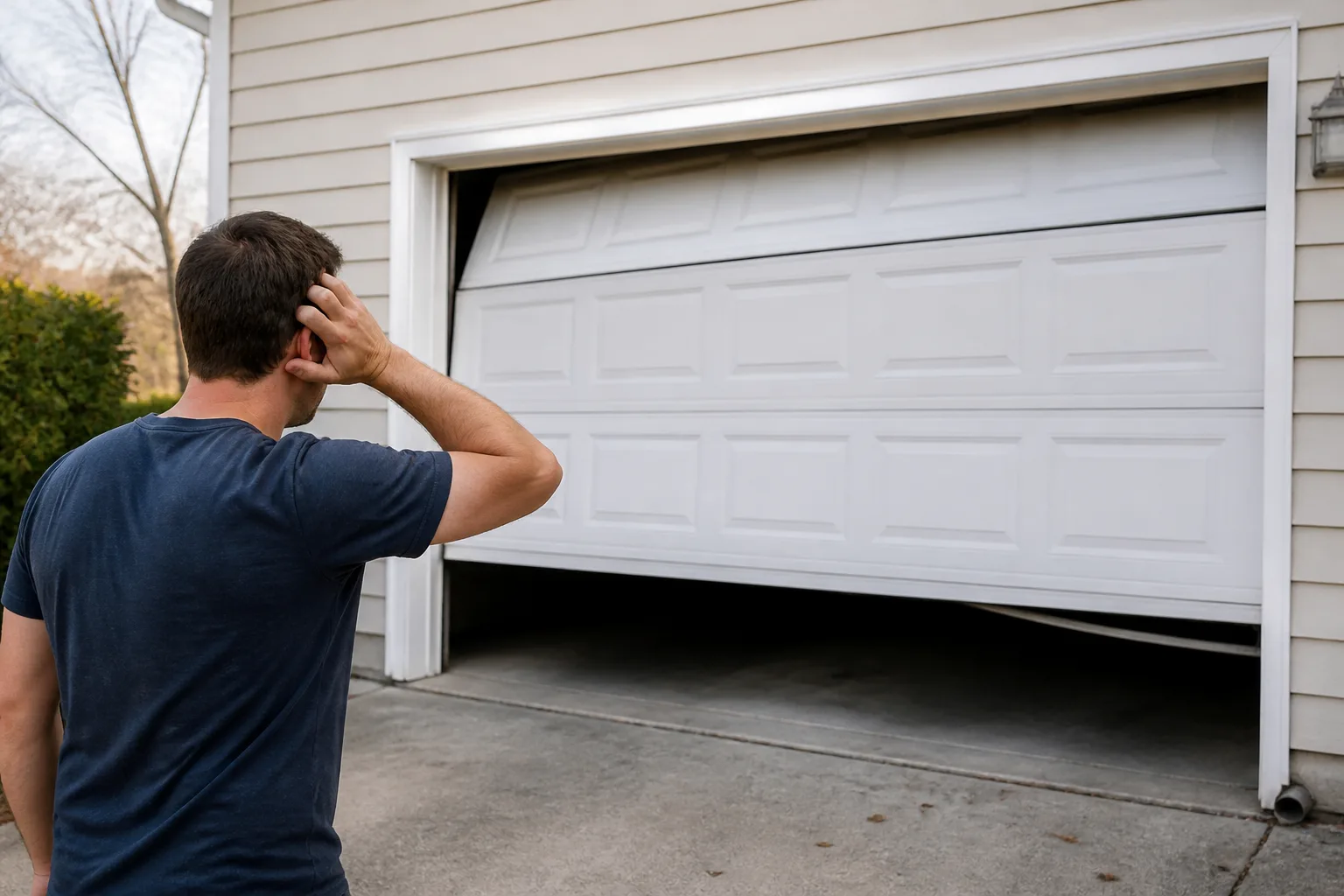
Most homeowners in Long Island City call us about a symptom, not a cause. The door is loud. The door is slow. A panel looks bent. But by the time a garage door gets loud enough to bother someone, the underlying wear has typically been happening for weeks. The door has been working harder to do the same job, and one day the weakest part gives.
That gap between “noticeable” and “happened” is where the expensive calls come from. A torsion spring that’s been losing tension gradually doesn’t announce itself. It just makes the opener strain a little more each cycle. A cable that’s been rubbing at the bottom drum doesn’t snap on the first sign of fray. It frays for a while first. The trick is learning to check the things that fail early, not the things that get loud late.
Think of it this way: your door is a balance system, not a motorized slab. The springs carry the weight. The opener just steers. When any one component drifts out of balance, the rest of the system compensates until it can’t. That’s why we look at the whole door system, springs, openers, panels, and cables, rather than just the part that started complaining.
The Movement Test: One Check That Beats Listening for Noise
The single best early-warning sign isn’t a sound. It’s a feel. An unbalanced door is a door whose springs are no longer carrying its weight evenly, and you can detect that with a manual lift at mid-height. Here’s how to run the movement test safely (with the opener disconnected and the door fully closed before you start):
- Pull the emergency release so the door is disconnected from the opener.
- Lift the door manually to about halfway and let it rest.
- Let go. A balanced door should stay roughly where you left it, or drift gently. A door that slams down fast is not balanced.
- Lift it from fully closed to fully open by hand. It should feel smooth and light. A door that feels heavy, jerky or needs real muscle is telling you the springs aren’t doing their job.
Why does this beat listening for noise? Because noise tells you something is already wrong, while an unbalanced door tells you the failure is on its way. In our experience, this one check catches more early spring problems in Long Island City than any other diagnostic. A door that fails the movement test is a door that hasn’t yet failed, but will.
Safety note: never attempt to adjust, remove or “help” a torsion spring yourself. Those springs are under extreme tension and can cause serious injury. Read the test, note the result, and let a trained technician handle the fix.
Cable Fraying: Where to Look (and Where Not To)
A frayed cable is a snapped cable waiting to happen, and most homeowners look in the wrong place for it. The visible run of cable along the track looks fine right up until it doesn’t. The wear that matters usually happens where the cable wraps around the drum at the bottom of the door, near the corner where the cable meets the drum edge.
What “frayed” actually looks like versus “worn”:
- Worn: the cable looks slightly dull, maybe a little flattened where it contacts the drum. This is normal wear and worth watching.
- Frayed: individual strands are broken and poking out of the braid like a wire brush. This is not normal. It’s a failure in progress.
- Kinked or bunched: the cable has jumped its groove on the drum or is overlapping itself. The door may still operate, but the geometry is already off.
If you see broken strands, stop cycling the door. A cable that snaps under load can whip loose, and that’s a genuine hazard. On a Clopay or Amarr door especially, cable routing is specific to the door model, which is why replacements need to match the original setup rather than a generic cable from a hardware aisle. We’re equipped to work on those brands and get the routing right the first time.
Opener Behavior That Signals Mechanical Wear, Not Electrical Fault
A straining opener is often mistaken for an electrical fault. It usually isn’t. Most modern openers have a built-in force-limit feature: they measure how much resistance the door is creating and adjust their power output to compensate. When a door’s springs start to weaken, the door gets heavier, the opener pushes harder, and the force limit quietly moves upward to keep things working.
That self-adjustment is the tell. Signs your opener is compensating for mechanical wear:
- The door reverses partway on a normal close, then works on a second try.
- The opener motor sounds louder or more labored than it used to.
- The door slows noticeably during the last third of its travel.
- On a LiftMaster or Chamberlain with a smart-home app, the “obstruction” alert fires when nothing is actually in the way.
If your Genie or Wayne Dalton opener keeps reversing on a door that used to close fine, don’t reach for a new opener yet. Have the door checked, because the opener is probably just telling you the door is out of balance. That’s why we diagnose garage door opener repair and spring wear as one system rather than two. Getting the balance right first often saves you the cost of an opener you didn’t need.
Weather Seal and Bottom Seal Failure in Long Island City’s Temperature Swings
Long Island City temperatures swing hard between seasons, and rubber seals don’t like it. The bottom seal and side weather seals flex with every change in temperature, and that constant cycle is what wears them out. A seal that looks fine in mild weather can harden and crack when the cold comes, then dry out and shrink with the summer heat.
Watch for these signs your seal is done:
- Daylight showing under the closed door, or water seeping in during rain.
- A brittle, cracked or crumbly bottom seal you can flake with a fingernail.
- Wind whistling past the sides, or drafts you can feel near the floor.
- Dirt, leaves, insects or small rodents getting in when the door is shut.
A failed bottom seal doesn’t just let weather in, it changes how the door meets the floor. That can throw off the door’s trip setting and make the opener think it’s hitting an obstruction. Replacing a seal is one of the cheapest fixes on the whole door, and one of the most overlooked. In Long Island City, a seal that fails here is often the first thing we look at when a door “keeps reversing for no reason.”
The Gap Between “The Door Works” and “The Door Is Safe”
This is the section we wish more homeowners read first. A door that opens and closes on command is functional. That does not make it structurally sound. Every garage door operates under constant spring tension, and a functional door can still be one cycle away from a dangerous failure. The two are not the same status.
Signs a working door is not a safe door:
- It passes the movement test badly (see above) but the opener drags it up anyway.
- The safety reverse doesn’t stop the door when something is under it.
- A spring looks stretched, has visible gaps, or shows signs of rust and deformation.
- The door is noisy or wobbly through its travel but “still works.”
When a functional but unbalanced door finally fails, it can be a spring break or a cable snap, and those are the calls that can’t wait. We offer garage door repair for exactly this situation, and it’s why we treat springs, openers, panels and cables as one system rather than isolated parts. A door that’s “working” is a door worth inspecting.
When to call a pro: the moment a door fails the movement test, shows frayed cables, or reverses without a visible obstruction. These are not jobs to keep watching. For full-system help that goes beyond a repair, see our garage door installation options when a door is past saving.
Related services in Long Island City: spring repair, opener repair, door repair and full installation. Garage Door Repair Long Island City handles all four layers of the system.
The Bottom Line
The signs worth acting on aren’t the loud ones. They’re the unusual ones: a door that’s slower than it used to be, one that’s heavy to lift at mid-height, a cable fraying at the bottom drum, an opener quietly compensating for a heavier door, a bottom seal letting in Long Island City weather, or a door that works but isn’t structurally sound. In our experience, each of these is the early signal of a mechanical failure that’s already weeks old, and fixing it early is far easier than the call that comes after a spring snaps.
If you’re in Long Island City and need help, Garage Door Repair Long Island City offers free estimates. Call (877) 549-7594. We answer 24/7. Fast dispatch from 7am to 7pm, Sunday through Friday. The price is quoted and agreed before any work starts, and the written estimate sets the final price.
Frequently Asked Questions
The first sign is usually a door that’s become heavier to lift manually or slower to open, not a loud bang. When a torsion spring loses even a fraction of its tension (15-20% is a meaningful loss), the door gets harder to operate before it fails. If you run the movement test at mid-height and the door slams down instead of holding, the spring is already failing. Call (877) 549-7594 for a free estimate before it snaps.
Look at the bottom drum, not the visible run of cable along the track. A cable about to break shows broken individual strands poking out of the braid, kinks, or overlapping wraps on the drum. If you see broken strands, stop operating the door and call a technician. A snapped cable can whip loose under tension. We handle cable and spring repair as one job, and the estimate is free.
If your door reverses on close with nothing in its path, the opener is likely compensating for mechanical wear rather than showing an electrical fault. Force-limit features on modern openers adjust to a heavier door, and that’s the signal the door is out of balance. Have the door checked before you replace the opener. Call (877) 549-7594 and we’ll diagnose it in one visit.
Not necessarily, but “working” and “safe” aren’t the same thing. A door can open every time yet still be out of balance, have a fraying cable, or have a seal that’s failed and thrown off its trip setting. If it fails the movement test or shows any of the signs above, it’s worth a look. Functional isn’t a safety certificate on a system under constant spring tension. Call (877) 549-7594 for a free estimate.
Written by the team at Garage Door Repair Long Island City.
Need Garage Door Help?
Call Garage Door Repair Long Island City - the local pro we connect you with is licensed and insured, here with fast help in Long Island City.
(877) 549-7594